Racism: The Norm


Racism: The Norm

Racist people will always proclaim that they are not racist. The truth of the matter is, they are not. By me saying that is, racist people are exhibiting their normal behavior. Racist people do not see any wrong in their thinking, speaking, or actions, because it is part of the normal everyday living. Jelena Ostapenko knows one thing and one thing only; she is superior to any non-white person on this planet and beyond. 


Jelena Ostapenko, a Latvian

Ostapenko later posted on social media about “how many messages I received that I am a racist.”

“I was NEVER racist in my life and I respect all nations of people in the world. For me it doesn’t matter where you come from,” she wrote.

After the two players met at the net for a postmatch handshake, they stayed near each other instead of going their separate ways, as usually happens. The 25th-seeded Ostapenko wagged a finger at Townsend as they spoke.

“It’s competition,” Townsend said. “People get upset when they lose.”

When they finally stopped talking, Townsend went over to the stands and egged on the partisan crowd, waving her arm overhead and the noise from spectators only grew louder.

She and Ostapenko have faced each other before in both singles and doubles.

“There’s never been any history. I don’t know how she feels about me, but there’s no beef on my side,” Townsend said. “She told me I have no education, no class, and to see what happens if we play each other outside of the US. I said, ‘I’m excited. Bring it.’ I’ve never been the one to back down from anything like that.”

Ostapenko went on social media to post what she called, “Just a small update about the match.”

She wrote that Townsend was “disrespectful” for not saying “sorry” after being helped by a net cord during a point.

“There are some rules in tennis which most of the players follow and it was (the) first time ever that this happened to me on tour,” Ostapenko posted. “If she plays in her homeland, it doesn’t mean that she can behave and do whatever she wants.”

Ostapenko also complained that Townsend began warming up before the match up at the net, instead of back at the baseline. While most players do begin at the baseline, Townsend noted that she has started with volleying for years.

Ostapenko has gotten into kerfuffles with opponents during matches before, including in 2021 when she lost to Alja Tomljanovic at Wimbledon. Tomljanovic accused Ostapenko of lying about needing to leave the court for a medical timeout to address an abdominal issue.

Townsend recently moved to the top of the WTA doubles rankings. But this is her first time reaching the third round in singles at a grand slam tournament since 2023.

In singles, Townsend is No. 139. She is the lowest-ranked American woman to beat a past grand slam champion in singles at a major since Kristie Ahn defeated – guess who? – Ostapenko at the 2019 US Open.

“The thing that I’m the most proud of is that I let my racket talk. Because ultimately, I’m the one here, sitting in front of you guys, moving on to the next round, getting the next check, moving on, being able to still be here and speak to you guys, and that’s what’s the most important,” Townsend said Wednesday. “She’s packed up and she’s gone.”

For more CNN news and newsletters create an account at CNN.com (Associated Press)

Ostapenko later posted on social media about “how many messages I received that I am a racist.”

“I was NEVER racist in my life and I respect all nations of people in the world. For me it doesn’t matter where you come from,” she wrote (Associated Press).


The devil [Satan] pleads and proclaim that he does not exist (McLaughlin, 2019). That is one hell of a trick. I’m not racist, is the first words out of a racist’s mouth once they are called to the carpet about their behavior. That is their defense mechanism; lest not forget Paula Deen. Most people do not believe that their normal behavior is offensive, it’s just a part of their everyday life. Blind bias is commonplace for people who are born outside of the United States.


“There’s never been any history. I don’t know how she feels about me, but there’s no beef on my side,” Townsend said. “She told me I have no education, no class, and to see what happens if we play each other outside of the US. I said, ‘I’m excited. Bring it.’ I’ve never been the one to back down from anything like that.” (Associated Press)


No Class – No Education – are the words used by pure racists towards black people. Those words, that statement replaces the words “Dumb/Stupid Nigger”. White people’s blind bias towards black people is that they, black people lack class and education according to their white standard. They believe that black people are lazy, shiftless, un-educated people lacking the society norms implemented by white people for white people. A black person can hold a PhD from an Ivy League university and still be called un-educated only because they are black. That’s just the way the call a black person a stupid-nigger.

Protective status is one of the most widely used terminology use to explain why one person, or a people has, while another has not. That is universal, people or a person has this or that, or do not have this or that because they are white, black, short, tall, male, female … etc. Jelena Ostapenko’s claim is that Taylor Townsend won the match because Taylor is from the U.S, thus giving her protective-status for warming-up at the net first.


Ostapenko also complained that Townsend began warming up before the match up at the net, instead of back at the baseline. While most players do begin at the baseline, Townsend noted that she has started with volleying for years (Associated Press).


According to Jelena, Taylor had home-court advantage, which is very sad to say, because from what I know about the Grand Slams of tennis none of them are played in Latvia.

Latvia, country of northeastern Europe and the middle of the three Baltic states, which lies along the shores of the Baltic Sea and the Gulf of Riga, and it is bounded by Estonia to the north, Russia to the east, Belarus to the southeast, and Lithuania to the south (Latvia, 2025). I need not say anymore.


In singles, Townsend is No. 139. She is the lowest-ranked American woman to beat a past grand slam champion in singles at a major since Kristie Ahn defeated – guess who? – Ostapenko at the 2019 US Open (Associated Press).


Take a look at this behavior. Kristie Ahn is Korean descent.


Wild card Kristie Ahn locks horns with 2017 French Open champion Jelena Ostapenko in Round 3 of the US Open 2019. The 27-year-old American is through to the third round of a Grand Slam for the first time in her career after beating Russians Svetlana Kuznetsova and Anna Kalinskaya. Previously, she had never won a Grand Slam main draw match. Meanwhile, Latvia’s 22-year-old is looking to make it to the fourth round of the US Open for the first time after falling in Round 3 in both 2017 and 2018 (Kristie Ahn vs Jelena Ostapenko in a milestone match! | US Open 2019 Round 3, n.d.)


Kristie Ahn (Kristie Ahn, n.d.)

Figure 3 Kristie Ahn – Wimbledon Tennis Championships 07/01/2019 • CelebMafia

is American just like Taylor is American, but Jelena did not treat Kristie like she treated Taylor. Enough said.

Figure 2 Taylor Townsend sported apparel with the interlocking TT logo of the namesake brand she is developing at the Mubadala Citi DC Open in Washington last month. Credit…Scott Taetsch/Getty Images

Finger Wagging/Pointing is the biggest sign of contempt one can display toward another. Pointing a finger in, or at someone’s face can get the snot slapped out of the pointer. That is offensive and pales only to spitting in a person’s face. It’s a sign of intimidation, and disrespect regardless of race, sex, or ethnicity; it’s just downright ugly, and they say God does not like ugly; cute, but not scripture.

Jelena became the angry white woman, my bad, Jelena was passionate, only black women who are passionate is labeled angry.

Taylor has more style and grace than Jelena ever will, unless God brings her to her knees; and He will!

Figure 2 Taylor Townsend sported apparel with the interlocking TT logo of the namesake brand she is developing at the Mubadala Citi DC Open in Washington last month. Credit…Scott Taetsch/Getty Images


“Every time that a phoenix is reborn, it has to burn itself to become new,” she said. “I’ve kind of been that throughout my career (Levin, 2025).” Taylor Townsend did not graduate from a college or university, but that does not make her un-educated. In fact, Taylor Townsend has her own tennis apparel. The Mis-Education of the Negro is an excellent book that Black people should read and have in their library.


With her new venture, Ms. Townsend is following in the footsteps of another Black American star in this year’s U.S. OpenVenus Williams, who introduced her EleVen brand in 2007 and has since sold collections in partnership with K-Swiss and Lacoste.

And Serena Williams, Ms. Townsend said, is among her style influences. “She’s a curvy woman, I’m a curvy woman, so obviously we have to accentuate our body types and what makes us look good and what makes us feel good (Levin, 2025).”


References

Associated Press, C. (n.d.). US Open opponents Taylor Townsend and Jelena Ostapenko get into a tense back-and-forth after match. Retrieved from https://www.msn.com/en-us/sports/tennis/us-open-opponents-taylor-townsend-and-jelena-ostapenko-get-into-a-tense-back-and-forth-after-match/ar-AA1LmHjb?ocid=BingNewsSerp

Kristie Ahn. (n.d.). Retrieved from Biographies & Memoirs: https://www.biographies.net/people/en/kristie_ahn.

Kristie Ahn – Wimbledon Tennis Championships 07/01/2019 • CelebMafia. (n.d.). Retrieved from https://www.bing.com/images/search?view=detailV2&thid=OIP.xXAey-AcndjbakoLaA-ZuAHaFI&mediaurl=https%3A%2F%2Fcelebmafia.com%2Fwp-content%2Fuploads%2F2019%2F07%2Fkristie-ahn-wimbledon-tennis-championships-07-01-2019-2.jpg&exph=886&expw=1280&q=kristie+ahn&fo

Kristie Ahn vs Jelena Ostapenko in a milestone match! | US Open 2019 Round 3. (n.d.). Retrieved from YouTube.com: https://www.youtube.com/watch?v=PztM4cHghQ4

Latvia. (2025, September 1). Retrieved from Britannica: https://www.britannica.com/place/Latvia

Levin, J. (2025, August 22). She’s Serving New Tennis Clothes at the U.S. Open. The New York Times. Retrieved from https://www.nytimes.com/2025/08/18/style/taylor-townsend-athletic-clothing-tennis-us-open.html

McLaughlin, R. R. (2019, September 18). The Devil’s greatest trick was convincing the world he doesn’t exist. Retrieved from Grace Bible Church: https://gbible.org/daily-message/devils-greatest-trick-convincing-world-doesnt-exist/

Trump and 1850 America – MAWA


MAWA – Make/Making America White Again

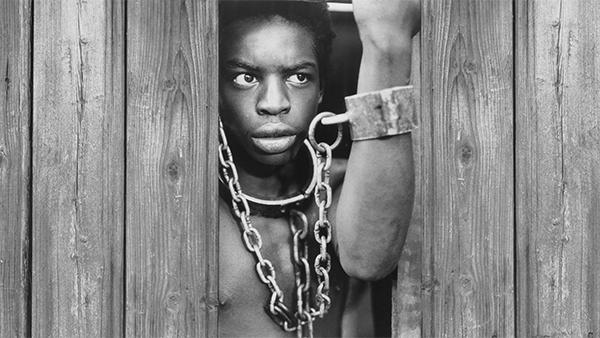
The television series Roots was very hard for me to watch, and even more difficult to understand. I was in High School and lacked the educational history and life experience in that period of time. Though my parents were from the deep south, my father from Sandersville Georgia, and my mother from Olar South Carolina. No, they were not enslaved, but they were only a generation, maybe two, from it. My parents are from the Jim Crow south.

Roots, the series covered the period of slavery in America from 1850 to 1865, so I thought. Roots actually, according to the timeline given for the series covers a period from 1750 to 1865. Now the series Roots is not historically accurate Roots (Google, n.d.) and I will not concentrate on Roots per say.


The television miniseries Roots (1977) covered slavery from the mid-18th century to the post-Civil War era. The saga chronicles multiple generations of one family, based on Alex Haley’s 1976 novel Roots: The Saga of an American Family. 

The main timeline of the miniseries includes:

Part 1 (1750–1767): The story begins in Gambia, West Africa, with the birth of Kunta Kinte and follows his journey after being captured and sold into slavery.

Part 2 (1767–1768): Kunta endures the transatlantic journey and an auction in Annapolis, Maryland, and is sent to work on a Virginia plantation.

Part 3 (1776): Kunta attempts to escape but is recaptured and hobbled. He is then sold to a doctor’s family.

Part 4 (1780–1790): Kunta marries another slave, Belle, and they have a daughter, Kizzy.

Part 5 (1806): Kizzy is sold and abused by her new owner, giving birth to a son, George.

Part 6 (1824): Kizzy’s son George becomes a talented cockfighter, earning the nickname “Chicken George”.

Part 7 (1861–1865): Chicken George is sent to England and returns after the start of the Civil War, only to learn his family has been sold and that his mother has died (Google, n.d.).

Part 8 (1865–1870): With the war over, Chicken George works to unite his family, helping them escape the oppressive sharecropping system and find their own land in Tennessee. 


1850 America

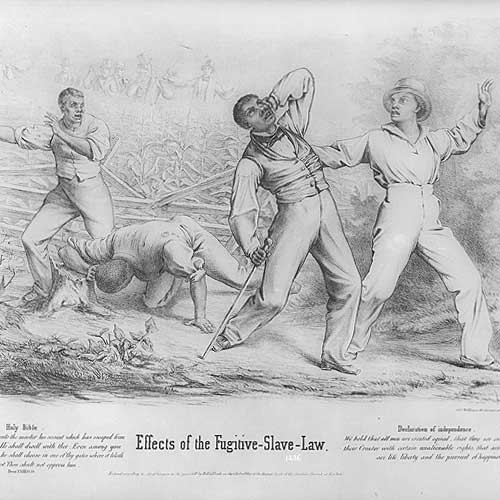
In the 1850s, the conflict over slavery brought the United States to the brink of destruction. Congress enacted new policies related to slavery. The courts ruled on cases related to slavery. Abolitionists continued their efforts to end the institution. Political parties, also affected by issues related to slavery, realigned and reformed. Newspapers, novelists, activists, and reformers joined the debate, all responding to the crisis, or even tried to inflame it in their own way, but all of these events were important in the decade preceding Abraham Lincoln’s election and the outbreak of Civil War. In an attempt to prevent a civil war, Congress enacted a series of laws that became known as the Compromise of 1850. These included an enhanced Fugitive Slave Law, which required law enforcement officials throughout the country to aid in the arrest of alleged runaway slaves, and it provoked a national controversy with many Northerners refusing to enforce the law’s provisions (Primary Source Set the Civil War: The Nation Moves Towards War, 1850-61, n.d.)

https://www.census.gov/library/visualizations/1850/dec/political-map.html

The main focus will be on the year 1850, and I will reiterate the laws, acts, treaties … etc. of that year.

Backdrop – Taking a Knee and The Star-Spangled Banner

When Colin Kaepernick, at that time, quarterback for the San Francisco 49ers, refused to stand during the playing/singing of the United States of America’s national anthem for the injustices Black Americans faced from the inception of enslavement to present time, grew attention in the NFL, and in small pockets of the United States (Wyche, 2016). It wasn’t until Mahmoud Abdul-Rauf who played for the NBA’s Denver Nuggets, formerly Chris Jackson prior to his conversion to Islam, refused to acknowledge the flag in protest, citing similar reasons as Kaepernick and saying that it conflicted with some of his Islamic beliefs (Wyche, 2016). Abdul-Rauf was briefly suspended by the NBA because of the backlash of the fans for his action, but a compromise was worked out between the league Rauf; he eventually stood with his teammates and coaches at the playing of the national anthem (Wyche, 2016).

Everything concerning the refusal of standing during the playing of the National Anthem went south when Drew Brees the quarterback of the NFL’s New Orleans Saints stated that he will not support what he deemed the disrespect of the U.S. flag, and apologizing for his comments after being educated on that subject matter; Donald Trump stating that Brees should not have apologized; Laura Ingraham of Fox News and her “shut up and dribble” comment to Lebron James’ comments about Drew Brees’ initial comment, and the murder of George Floyd (Pickman, 2020), which in turn sparked the ‘Black Lives Matter’ movement; funny thing about movements, they just move from one place to another, we need a revolution.

When all the smoke cleared, Black Americans began singing the National Anthem at all the major sporting events, MLB, NFL, and NBA. They sang their hearts out; they sang it loud and proud. The overall majority of Black Americans have no idea what The Star-Spangled Banner is about.

Oh say can you see?

Francis Scott Key penned the Star-Spangled Banner during the war of 1812 during the bombing of Fort McHenry in the slave-state of Maryland. Now, if you are a White American, it can be viewed as a bad thing, but I am not, so do not expect me to feel bad about what was happening to Maryland at that time. In June of 1812 the U.S. declared war with the United Kingdom [Great Britain] (The War of 1812, 2011), most times when a person hear the war of 1812 they tend to think of Napolean, and/or The Year 1812, Solemn Overture, Op. 49, popularly known as the 1812 Overture, is a concert overture written in E-flat major, E-flat minor1880 by Russian composer Pyotr Ilyich Tchaikovsky, to commemorate Russia’s victory over France, which is now used in the United States during the 4th of July fireworks display (Overture). Oh, say what!


Fugitive Slave Law

References

References

(n.d.). Retrieved from Google: https://www.google.com/search?q=The+television+series+Roots+covered+slavery+from+what+time+period.&sca_esv=7482b234d8f1e9f4&source=hp&ei=5AjKaMXNBsm9ptQP69KfyAg&iflsig=AOw8s4IAAAAAaMoW9KXczBEkN5ALn6AEy2134lZ9l9os&ved=0ahUKEwjFz6rxzN6PAxXJnokEHWvpB4kQ4dUDC

Primary Source Set The Civil War: The Nation Moves Towards War, 1850-61. (n.d.). Retrieved from Library of Congress: https://www.loc.gov/classroom-materials/civil-war-the-nation-moves-towards-war-1850-to-1861/

Slavery and the Judiciary, 1740 to 1860. (n.d.). Retrieved from Libraryo of Congress: https://www.loc.gov/collections/slavery-and-the-judiciary-from-1740-to-1860/about-this-collection/

Timeline – The 1850s. (n.d.). Retrieved from America’s Best History.com: https://americasbesthistory.com/abhtimeline1850.html

The Real I Have a Dream Speech ~ The Great March on Detroit


Hello folks,

I not too long ago posted about the famous ‘I Have a Dream’ speech by the late Reverend Dr. Martin Luther King Jr. I mentioned in that post that the speech given by Dr. King was titled ‘Normalcy No More’ and the ‘I have a Dream’ portion was discussed or conveyed by Dr. King on a request from a women who shouted, “Tell (‘em) them about the dream Martin.” Now some of you may think that I am making a big ado about nothing. Why am I making a big deal about something so small and insignificant that took place 50 years ago?

Well, I say to you that this is a very significant point of view. There was an event that history disregards, maybe by design; this event which I speak of, lead up to the ‘March on Washington’. It was there at this event in which Dr. Martin Luther King Jr. wrote and spoke his dream speech. There is a different in some of what he said on both days, the version of his dream he gave in Washington, DC was toned down and all inclusive. This is where I will begin my blogging purpose. It will be a series called ‘From Jim Crow to Stop-N-Frisk’.

I will be blogging a series of speeches by Dr. Martin Luther King Jr. and will tackle the question of what, if anything has changed from the 1950’s up until today? I am looking forward to that, but in the meantime let’s take a look back at a very important event that is not mentioned.

I was always told in college not to use Wikipedia as a research source on any of my papers, well I am going to break that rule right now.


Cobo Center is a major convention center situated along Jefferson and Washington avenues in downtown Detroit. It was named for Albert E. Cobo, mayor of Detroit from 1950 to 1957. Designed by Gino Rossetti, the center opened in 1960.

The Center and its attached arena initially cost $56 million and took four years to complete. It is located on the site where Antoine de la Mothe Cadillac, a French colonist, first set foot and landed on the banks of the river in July 1701 and claimed the area for France in the name of King Louis XIV.

As one of the nation’s first mega convention centers, Cobo became even larger when renovations and expansions were completed in 1989. At a cost of $225 million, it nearly doubled in size to 2.4 million total square feet and was renamed Cobo Conference/Exhibition Center. Now, the Center offers 723,000 square feet of prime exhibit space in five exhibit halls ranging in size from 100,000 to 200,000 square feet. Cobo’s flexible design allows the adjoining four exhibit halls on the main floor to form 623,000 square feet of contiguous exhibit space.

The first convention at Cobo Center was held in 1960 by the Florist Telegraph Delivery (FTD). The first event was the 43rd Auto Industry Dinner on October 17, 1960. President Dwight D. Eisenhower was the keynote speaker, and the ceremony aired live on WXYZ-TV.

Since 1965, the largest event held in Cobo Center is the nation’s premier automobile show, The North American International Auto Show (NAIAS), occurring annually in January. This prestigious event draws hundreds of international press and suppliers during its initial five days and has a spectacular charity preview party for 11,000 guests the evening before the public opening. [Cite: Detroit Free Press 2013] Since 1976, the Charity Preview has raised an average of $2.4 million yearly for southeastern Michigan children’s charities. After the Charity Preview party, the NAIAS is open to the public for ten days, drawing, on average, 735,000 attendees.[Cite: WXYZ Channel 7 2013]

I guess you are now wondering what does this have to do with Dr. Martin Luther King Jr., and the ‘I Have a Dream’ speech. This has everything to do with it. Notice that Cobo Hall opened in 1960 and if you was to Google historical events at Cobo Hall you would not find much, but buried deep in the many threads that will come up is this one, the one event I am speaking about;


http://www.youtube.com/watch?v=2Q3fosthiFU&feature=player_embedded

1. Martin Luther King, Jr.’s “I Have A Dream” speech.

This is the speech, delivered at the 1963 March on Washington that made Martin Luther King, Jr. a national icon. But he delivered it first about six weeks before in Detroit. It was released as a single on Motown Records, entitled, “The Great March to Freedom.”

Yes folks, and that woman was there and she knew all about Dr. King’s dream of a new America. That woman was none other than Mahalia Jackson. It is important because this event was a part of the Civil Rights Movement.

http://www.huffingtonpost.com/2013/06/22/martin-luther-king-detroit-_n_3484624.html

The march in Detroit, commonly known as “The Walk to Freedom,” occurred on June 23rd, 1963. Thousands of civil rights activists marched through Detroit singing and demanding the end of segregation. MLK then delivered a speech at Cobo Hall stressing that it was their duty to take part in the walk to freedom and participate in other demonstrations in order to end the era of racism and inequality.

So here it is folks. Enjoy.

The Walk to Freedom was a Civil Rights March that took place on June 23, 1963 in Detroit, Michigan. It drew crowds of an estimated 125,000 or more and was for a short time described as “the largest civil rights demonstration in the nation’s history.” Only two months later on August 28, the March on Washington took place completely overshadowing whatever attention the Walk to Freedom had received in those two months. The Detroit Walk to Freedom has been somewhat lost to obscurity outside of local Detroit history.

Various ministers and leaders of local and national organizations including the Mayor of Detroit were in attendance and gave speeches. Among them was Martin Luther King Jr. who after the Walk to Freedom March gave an impassioned speech. It was a precursor to his famous “I Have a Dream” speech given weeks later in Washington, D.C. The march itself was, to King and his supporters, partly a practice run of the March on Washington.

Reverend Clarence L. Franklin and Reverend Albert Cleage were Civil Rights leaders who, although they had very different viewpoints and methods of tackling injustice, came together and proposed the idea of having a large march or demonstration in Detroit. Together along with other organizers, they formed the Detroit Council for Human Rights which would be the organization that would actually put on the Walk to Freedom march. Cleage originally wanted the march to be all black and led by backs only; however, the local Detroit branch of the National Association for the Advancement of Colored People (NAACP) was prepared to not support the march and even boycott it if the DCHR did not include some local white leaders in the march. Although the march was open to all, the vast majority that came to the march were African-American, but there were several prominent whites, such as the Mayor of Detroit Jerome Cavanagh, who joined in leading the march or otherwise showed their support.

The Walk to Freedom had two main purposes. The first and main purpose of the march “… was to speak out against segregation and the brutality that met civil rights activists in the South while at the same time addressing concerns of African Americans in the urban North: inequality in hiring practices, wages, education, and housing.”. The second purpose of the march was to raise funds and awareness for the Southern Christian Leadership Conference (SCLC), which was an organization that did civil rights work in the south. The date that was picked to be when the march would take place, June 23, was to honor the 20th anniversary of The Detroit Race Riot that had happened in 1943 in which over two dozen people were killed and many more injured.

Many prominent people, known locally and nationally, lead the Walk to Freedom. From the Detroit Council for Human Rights: Rev. C. L. Franklin, father of famous singer Aretha Franklin and was chairman of the DCHR; Rev. Albert Cleage, who was a part of forming the DCHR; and Benjamin McFall, director of the DCHR. The former Governor of Michigan John Swainson, who was governor from 1961-1962, joined with the Mayor of Detroit Jerome Cavanaugh, and Martin Luther King Jr.. Also leading the march was the president of the United Auto Workers (UAW) Walter Reuther; Billie S. Farnum, who was the State Auditor General. George Romney, then current Governor of Michigan, was unable to attend the march because it took place on a Sunday and conflicted with his religious practices; however, since Romney fully supported the march and the cause, he sent representatives to walk in his place.

To generate interest in the Walk to Freedom, stickers, handbills, and other advertisements were spread around the city by event planners. The march itself started, at about 3pm in the afternoon, on Woodward Avenue and Adelaide, it continued on Woodward, and then onto Jefferson and concluded at Cobo Arena and Hall. Songs were sung, such as “The Battle Hymn of the Republic”, and people carried banners and signs. The whole march only lasted about an hour and a half, but afterwards there were speeches given. At least 125,000 people participated in the march and tens of thousands packed into Cobo Arena and the surrounding area to listen to the speeches.

Many of the leaders of the march gave speeches. Albert Cleage, Walter Reuther, Mayor Cavanagh, former Governor Swainson, Congressman Charles Diggs, a representative of Governor Romney, Martin Luther King Jr., and others all gave speeches to the eager crowds. The speech spectators were looking forward to the most however was the one given by Martin Luther King Jr., and he obliged them by giving a speech that was as riveting as his speeches always were.

Some parts of his Detroit speech are similar to the one he gave in Washington. In particular, the end of his speech was a longer and more detailed version of the legendary “I Have a Dream” portion of his speech given two months later in Washington.

For comparison certain parts of both speeches are alternated below, given on the left is the speech in Detroit at the Walk to Freedom, and given on the right is the speech in Washington.

“Almost one hundred and one years ago, on September the 22nd, 1862, to be exact, a great and noble American, Abraham Lincoln, signed an executive order, which was to take effect on January the first, 1863. This executive order was called the Emancipation Proclamation and it served to free the Negro from the bondage of physical slavery. But one hundred years later, the Negro in the United States of America still isn’t free.”

“Fivescore years ago, a great American, in whose symbolic shadow we stand today, signed the Emancipation Proclamation […] But one hundred years later, the Negro still is not free. One hundred years later, the life of the Negro is still sadly crippled by the manacles of segregation and the chains of discrimination.”

“And so we must say, now is the time to make real the promises of democracy. Now is the time to transform this pending national elegy into a creative psalm of brotherhood. Now is the time to lift our nation. Now is the time to lift our nation from the quicksands of racial injustice to the solid rock of racial justice.”

“Now is the time to rise from the dark and desolate valley of segregation to the sunlit path of racial justice. Now is the time to lift our nation from the quicksands of racial injustice to the solid rock of brotherhood.”

“And so this afternoon, I have a dream. It is a dream deeply rooted in the American dream […] I have a dream that one day, right down in Georgia and Mississippi and Alabama, the sons of former slaves and the sons of former slave owners will be able to live together as brothers. I have a dream this afternoon that one day, one day little white children and little Negro children will be able to join hands as brothers and sisters […] I have a dream this afternoon that my four little children, that my four little children will not come up in the same young days that I came up within, but they will be judged on the basis of the content of their character, not the color of their skin… I have a dream this evening that one day we will recognize the words of Jefferson that “all men are created equal, that they are endowed by their Creator with certain unalienable Rights, that among these are Life, Liberty and the pursuit of Happiness.” I have a dream that one day every valley shall be exalted, and “every valley shall be exalted, and every hill shall be made low; the crooked places shall be made straight, and the rough places plain; and the glory of the Lord shall be revealed, and all flesh shall see it together.” […] And with this faith I will go out and carve a tunnel of hope through the mountain of despair. With this faith, I will go out with you and transform dark yesterdays into bright tomorrows. With this faith, we will be able to achieve this new day when all of God’s children, black men and white men, Jews and Gentiles, Protestants and Catholics, will be able to join hands and sing with the Negroes in the spiritual of old: Free at last! Free at last! Thank God almighty, we are free at last!”

“I say to you today, my friends, so even though we face the difficulties of today and tomorrow, I still have a dream. It is a dream deeply rooted in the American dream. I have a dream that one day this nation will rise up and live out the true meaning of its creed: “We hold these truths to be self-evident, that all men are created equal.” I have a dream that one day on the red hills of Georgia, the sons of former slaves and the sons of former slave owners will be able to sit down together at the table of brotherhood. I have a dream that my four little children will one day live in a nation where they will not be judged by the color of their skin but by the content of their character […] I have a dream that one day “every valley shall be exalted, and every hill and mountain shall be made low; the rough places will be made plain, and the crooked places will be made straight; and the glory of the Lord shall be revealed, and all flesh shall see it together.” […] With this faith we will be able to hew out of the mountain of despair a stone of hope. With this faith we will be able to transform the jangling discords of our nation into a beautiful symphony of brotherhood… And when this happens, when we allow freedom ring, when we let it ring from every village and every hamlet, from every state and every city, we will be able to speed up that day when all of God’s children, black men and white men, Jews and Gentiles, Protestants and Catholics, will be able to join hands and sing in the words of the old Negro spiritual: Free at last! Free at last! Thank God Almighty, we are free at last!”

Governor George Romney officially had the day of the Walk to Freedom declared “Freedom March Day in Michigan”. There are several different variations of the title “Walk to Freedom” that have been used. Locally in Detroit, it has been known by the title, King’s Walk on Woodward, and the Great March. Other variations of the title that have been used include, Walk to Freedom March, Great March/Walk to Freedom, Walk for/to Freedom, Detroit Freedom Walk/March, and Great March on Detroit.

Although Governor Romney had sent representatives in his place to march in the Walk to Freedom, he wanted to do more than that. A few days after the march, he joined a group of hundreds through Grosse Pointe, a wealthy suburb of Detroit, to advocate for civil rights. He was also involved with other marches, rallies, and demonstrations in Michigan and knew Martin Luther King well. The Walk to Freedom, however, did not have the huge impact on Detroit and on civil rights that the March on Washington had and the Detroit Council for Human Rights (DCHR) did not last. The DCHR tried to start up a Northern Christian Leadership Conference as a companion to the SCLC, but disagreements, particularly between Franklin and Cleage, kept the idea from becoming a permanent reality. Albert Cleage eventually left the DCHR and it seems that other differences and disagreements caused the DCHR to dissolve.


The speech

Speech at the Great March on Detroit

23 June 1963


Two months before the March on Washington, King stood before a throng of 25,000 people at Cobo Hall in Detroit to expound upon making “the American Dream a reality”. King repeatedly exclaimed, “I have a dream this afternoon”. He articulated the words of the prophets Amos and Isaiah, declaring that “justice will roll down like waters, and righteousness like a mighty stream,” for “every valley shall be exalted, and every hill and mountain shall be made low”. As he had done numerous times in the previous two years, King concluded his message imagining the day “when all of God’s children, black men and white men, Jews and Gentiles, Protestants and Catholics, will be able to join hands and sing with the Negroes in the spiritual of old: Free at last! Free at last! Thank God Almighty, we are free at last!”.

My good friend, the Reverend C. L. Franklin, all of the officers and members of the Detroit Council of Human Rights, distinguished platform guests, ladies and gentlemen, I cannot begin to say to you this afternoon how thrilled I am, and I cannot begin to tell you the deep joy that comes to my heart as I participate with you in what I consider the largest and greatest demonstration for freedom ever held in the United States. [Applause] And I can assure you that what has been done here today will serve as a source of inspiration for all of the freedom-loving people of this nation. [Applause] [Audience:] (All right)

I think there is something else that must be said because it is a magnificent demonstration of discipline. With all of the thousands and hundreds of thousands of people engaged in this demonstration today, there has not been one reported incident of violence. [Applause] I think this is a magnificent demonstration of our commitment to nonviolence in this struggle for freedom all over the United States, and I want to commend the leadership of this community for making this great event possible and making such a great event possible through such disciplined channels. [Applause]

Almost one hundred and one years ago, on September the 22nd, 1862, to be exact, a great and noble American, Abraham Lincoln, signed an executive order, which was to take effect on January the first, 1863. This executive order was called the Emancipation Proclamation and it served to free the Negro from the bondage of physical slavery. But one hundred years later, the Negro in the United States of America still isn’t free. [Applause]

But now more than ever before, America is forced to grapple with this problem, for the shape of the world today does not afford us the luxury of an anemic democracy. The price that this nation must pay for the continued oppression and exploitation of the Negro or any other minority group is the price of its own destruction. For the hour is late. The clock of destiny is ticking out, and we must act now before it is too late. (Yeah) [Applause]

The events of Birmingham, Alabama, and the more than sixty communities that have started protest movements since Birmingham, are indicative of the fact that the Negro is now determined to be free. (Yeah) [Applause] For Birmingham tells us something in glaring terms. It says first that the Negro is no longer willing to accept racial segregation in any of its dimensions. [Applause] For we have come to see that segregation is not only sociologically untenable, it is not only politically unsound, it is morally wrong and sinful. Segregation is a cancer in the body politic, which must be removed before our democratic health can be realized. [Applause] (Yeah) Segregation is wrong because it is nothing but a new form of slavery covered up with certain niceties of complexity. [Applause] Segregation is wrong because it is a system of adultery perpetuated by an illicit intercourse between injustice and immorality. [Applause] And in Birmingham, Alabama, and all over the South and all over the nation, we are simply saying that we will no longer sell our birthright of freedom for a mess of segregated pottage. [Applause] (All right) In a real sense, we are through with segregation now, henceforth, and forevermore. [Sustained applause]

Now Birmingham and the freedom struggle tell us something else. They reveal to us that the Negro has a new sense of dignity and a new sense of self-respect. (Yes) For years— (That’s right. Come a long way) [Applause] I think we all will agree that probably the most damaging effect of segregation has been what it has done to the soul of the segregated as well as the segregator. [Applause] It has given the segregator a false sense of superiority and it has left the segregated with a false sense of inferiority. (All right) [Applause] And so because of the legacy of slavery and segregation, many Negroes lost faith in themselves and many felt that they were inferior.

But then something happened to the Negro. Circumstances made it possible and necessary for him to travel more: the coming of the automobile, the upheavals of two world wars, the Great Depression. And so his rural, plantation background gradually gave way to urban, industrial life. And even his economic life was rising through the growth of industry, the influence of organized labor, expanded educational opportunities. And even his cultural life was rising through the steady decline of crippling illiteracy. And all of these forces conjoined to cause the Negro to take a new look at himself. Negro masses, [Applause] Negro masses all over began to re-evaluate themselves, and the Negro came to feel that he was somebody. His religion revealed to him, [Laughter. Applause] his religion revealed to him that God loves all of his children, and that all men are made in His image, and that figuratively speaking, every man from a bass-black to a treble-white is significant on God’s keyboard. [Applause]

So, the Negro can now unconsciously cry out with the eloquent poet,

Fleecy locks and black complexion

Cannot forfeit nature’s claim.

Skin may differ, but affection

Dwells in black and white the same.

Were I so tall as to reach the pole

Or to grasp at the ocean at a span,

I must be measured by my soul

The mind is the standard of the man. [Applause]

But these events that are taking place in our nation tell us something else. They tell us that the Negro and his allies in the white community now recognize the urgency of the moment. I know we have heard a lot of cries saying, “Slow up and cool off.” [Laughter] We still hear these cries. They are telling us over and over again that you’re pushing things too fast, and so they’re saying, “Cool off.” Well, the only answer that we can give to that is that we’ve cooled off all too long, and that is the danger. [Applause] There’s always the danger if you cool off too much that you will end up in a deep freeze. [Applause] “Well,” they’re saying, “you need to put on brakes.” The only answer that we can give to that is that the motor’s now cranked up and we’re moving up the highway of freedom toward the city of equality, [Applause] and we can’t afford to stop now because our nation has a date with destiny. We must keep moving.

Then there is another cry. They say, “Why don’t you do it in a gradual manner?” Well, gradualism is little more than escapism and do-nothingism, which ends up in stand-stillism. [Applause] We know that our brothers and sisters in Africa and Asia are moving with jet-like speed toward the goal of political independence. And in some communities we are still moving at horse-and-buggy pace toward the gaining of a hamburger and a cup of coffee at a lunch counter. [Applause]

And so we must say, now is the time to make real the promises of democracy. Now is the time to transform this pending national elegy into a creative psalm of brotherhood. Now is the time to lift our nation. [Applause] Now is the time to lift our nation from the quicksands of racial injustice to the solid rock of racial justice. Now is the time to get rid of segregation and discrimination. Now is the time. [Applause] (Now. Now)

And so this social revolution taking place can be summarized in three little words. They are not big words. One does not need an extensive vocabulary to understand them. They are the words “all,” “here,” and “now.” We want all of our rights, we want them here, and we want them now. [Applause] [Recording interrupted]

Now the other thing that we must see about this struggle is that by and large it has been a nonviolent struggle. Let nobody make you feel that those who are engaged or who are engaging in the demonstrations in communities all across the South are resorting to violence; these are few in number. For we’ve come to see the power of nonviolence. We’ve come to see that this method is not a weak method, for it’s the strong man who can stand up amid opposition, who can stand up amid violence being inflicted upon him and not retaliate with violence. (Yeah) [Applause]

You see, this method has a way of disarming the opponent. It exposes his moral defenses. It weakens his morale, and at the same time it works on his conscience, and he just doesn’t know what to do. If he doesn’t beat you, wonderful. If he beats you, you develop the quiet courage of accepting blows without retaliating. If he doesn’t put you in jail, wonderful. Nobody with any sense likes to go to jail. But if he puts you in jail, you go in that jail and transform it from a dungeon of shame to a haven of freedom and human dignity. [Applause] And even if he tries to kill you, (He can’t kill you) you’ll develop the inner conviction that there are some things so dear, some things so precious, some things so eternally true, that they are worth dying for. (Yes) [Applause] And I submit to you that if a man has not discovered something that he will die for, he isn’t fit to live. [Applause]

This method has wrought wonders. As a result of the nonviolent Freedom Ride movement, segregation in public transportation has almost passed away absolutely in the South. As a result of the sit-in movement at lunch counters, more than 285 cities have now integrated their lunch counters in the South. I say to you, there is power in this method. [Applause]

And I think by following this approach it will also help us to go into the new age that is emerging with the right attitude. For nonviolence not only calls upon its adherents to avoid external physical violence, but it calls upon them to avoid internal violence of spirit. It calls on them to engage in that something called love. And I know it is difficult sometimes. When I say “love” at this point, I’m not talking about an affectionate emotion. (All right) It’s nonsense to urge people, oppressed people, to love their oppressors in an affectionate sense. I’m talking about something much deeper. I’m talking about a sort of understanding, creative, redemptive goodwill for all men. [Applause]

We are coming to see now, the psychiatrists are saying to us, that many of the strange things that happen in the subconscience, many of the inner conflicts, are rooted in hate. And so they are saying, “Love or perish.” But Jesus told us this a long time ago. And I can still hear that voice crying through the vista of time, saying, “Love your enemies, bless them that curse you, pray for them that despitefully use you.” And there is still a voice saying to every potential Peter, “Put up your sword.” History is replete with the bleached bones of nations, history is cluttered with the wreckage of communities that failed to follow this command. And isn’t it marvelous to have a method of struggle where it is possible to stand up against an unjust system, fight it with all of your might, never accept it, and yet not stoop to violence and hatred in the process? This is what we have. [Applause]

Now there is a magnificent new militancy within the Negro community all across this nation. And I welcome this as a marvelous development. The Negro of America is saying he’s determined to be free and he is militant enough to stand up. But this new militancy must not lead us to the position of distrusting every white person who lives in the United States. There are some white people in this country who are as determined to see the Negro free as we are to be free. [Applause] This new militancy must be kept within understanding boundaries.

And then another thing I can understand. We’ve been pushed around so long; we’ve been the victims of lynching mobs so long; we’ve been the victims of economic injustice so long—still the last hired and the first fired all over this nation. And I know the temptation. I can understand from a psychological point of view why some caught up in the clutches of the injustices surrounding them almost respond with bitterness and come to the conclusion that the problem can’t be solved within, and they talk about getting away from it in terms of racial separation. But even though I can understand it psychologically, I must say to you this afternoon that this isn’t the way. Black supremacy is as dangerous as white supremacy. [Applause] No, I hope you will allow me to say to you this afternoon that God is not interested merely in the freedom of black men and brown men and yellow men. God is interested in the freedom of the whole human race. [Applause] And I believe that with this philosophy and this determined struggle we will be able to go on in the days ahead and transform the jangling discords of our nation into a beautiful symphony of brotherhood.

As I move toward my conclusion, you’re asking, I’m sure, “What can we do here in Detroit to help in the struggle in the South?” Well, there are several things that you can do. One of them you’ve done already, and I hope you will do it in even greater dimensions before we leave this meeting. [Recording interrupted]

Now the second thing that you can do to help us down in Alabama and Mississippi and all over the South is to work with determination to get rid of any segregation and discrimination in Detroit, [Applause] realizing that injustice anywhere is a threat to justice everywhere. And we’ve got to come to see that the problem of racial injustice is a national problem. No community in this country can boast of clean hands in the area of brotherhood. Now in the North it’s different in that it doesn’t have the legal sanction that it has in the South. But it has its subtle and hidden forms and it exists in three areas: in the area of employment discrimination, in the area of housing discrimination, and in the area of de facto segregation in the public schools. And we must come to see that de facto segregation in the North is just as injurious as the actual segregation in the South. [Applause] And so if you want to help us in Alabama and Mississippi and over the South, do all that you can to get rid of the problem here.

And then we also need your support in order to get the civil rights bill that the President is offering passed. And there’s a reality, let’s not fool ourselves: this bill isn’t going to get through if we don’t put some work in it and some determined pressure. And this is why I’ve said that in order to get this bill through, we’ve got to arouse the conscience of the nation, and we ought to march to Washington more than 100,000 in order to say, [Applause] in order to say that we are determined, and in order to engage in a nonviolent protest to keep this issue before the conscience of the nation.

And if we will do this we will be able to bring that new day of freedom into being. If we will do this we will be able to make the American dream a reality. And I do not want to give you the impression that it’s going to be easy. There can be no great social gain without individual pain. And before the victory for brotherhood is won, some will have to get scarred up a bit. Before the victory is won, some more will be thrown into jail. Before the victory is won, some, like Medgar Evers, may have to face physical death. But if physical death is the price that some must pay to free their children and their white brothers from an eternal psychological death, then nothing can be more redemptive. Before the victory is won, some will be misunderstood and called bad names, but we must go on with a determination and with a faith that this problem can be solved. (Yeah) [Applause]

And so I go back to the South not in despair. I go back to the South not with a feeling that we are caught in a dark dungeon that will never lead to a way out. I go back believing that the new day is coming. And so this afternoon, I have a dream. (Go ahead) It is a dream deeply rooted in the American dream.

I have a dream that one day, right down in Georgia and Mississippi and Alabama, the sons of former slaves and the sons of former slave owners will be able to live together as brothers.

I have a dream this afternoon (I have a dream) that one day, [Applause] one day little white children and little Negro children will be able to join hands as brothers and sisters.

I have a dream this afternoon that one day, [Applause] that one day men will no longer burn down houses and the church of God simply because people want to be free.

I have a dream this afternoon (I have a dream) that there will be a day that we will no longer face the atrocities that Emmett Till had to face or Medgar Evers had to face, that all men can live with dignity.

I have a dream this afternoon (Yeah) that my four little children, that my four little children will not come up in the same young days that I came up within, but they will be judged on the basis of the content of their character, not the color of their skin. [Applause]

I have a dream this afternoon that one day right here in Detroit, Negroes will be able to buy a house or rent a house anywhere that their money will carry them and they will be able to get a job. [Applause] (That’s right)

Yes, I have a dream this afternoon that one day in this land the words of Amos will become real and “justice will roll down like waters, and righteousness like a mighty stream.”

I have a dream this evening that one day we will recognize the words of Jefferson that “all men are created equal, that they are endowed by their Creator with certain unalienable Rights, that among these are Life, Liberty and the pursuit of Happiness.” I have a dream this afternoon. [Applause]

I have a dream that one day every valley shall be exalted, and “every valley shall be exalted, and every hill shall be made low; the crooked places shall be made straight, and the rough places plain; and the glory of the Lord shall be revealed, and all flesh shall see it together.” [Applause]

I have a dream this afternoon that the brotherhood of man will become a reality in this day.

And with this faith I will go out and carve a tunnel of hope through the mountain of despair. With this faith, I will go out with you and transform dark yesterdays into bright tomorrows. With this faith, we will be able to achieve this new day when all of God’s children, black men and white men, Jews and Gentiles, Protestants and Catholics, will be able to join hands and sing with the Negroes in the spiritual of old:

Free at last! Free at last!

Thank God almighty, we are free at last! [Applause]

Juneteenth: June 19, 1865


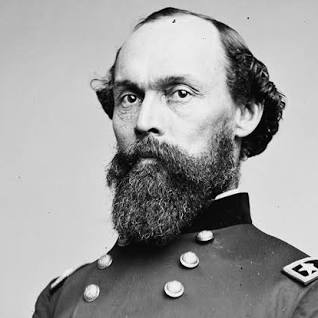
June 19, 1865 (there about), General Gordon Granger

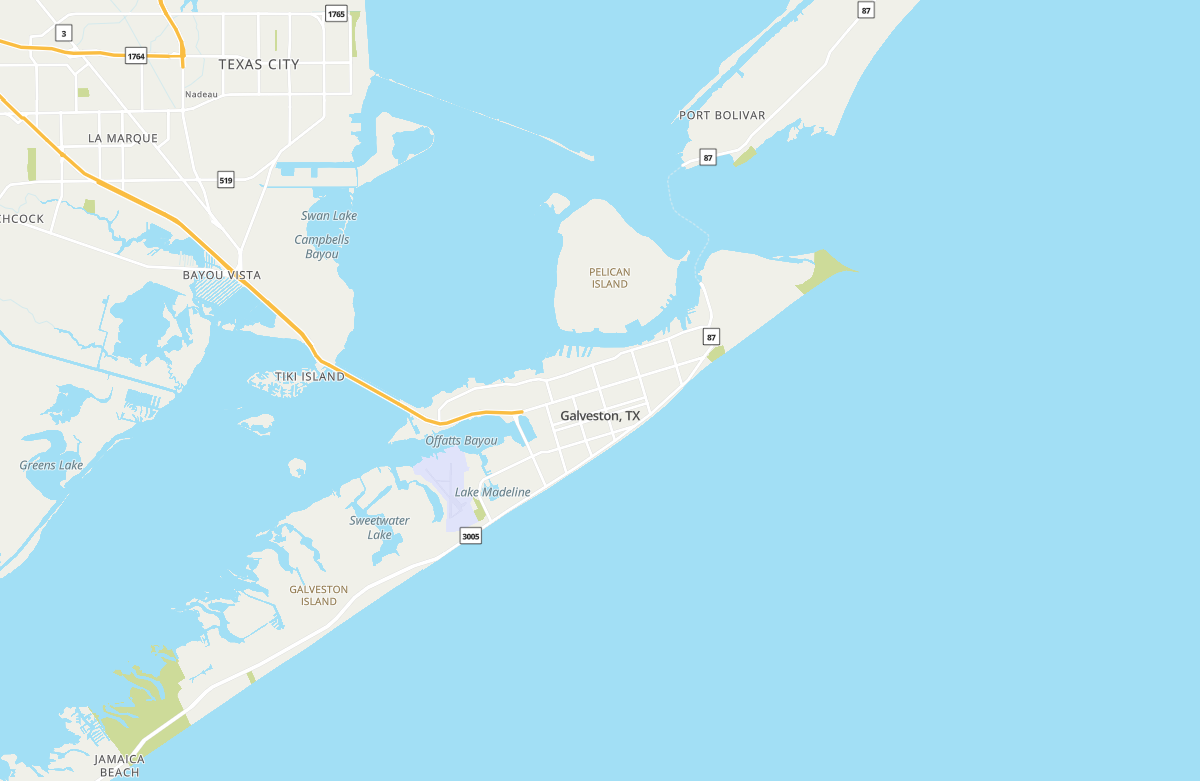
arrived on the island of Galveston, TX .

with General Order No. 3 declaring the practice of slavery is no longer allowed there, and that those held in slavery are now free.

That was then, June 19, 1865, the next day June 20, 1865 there were people still held in slavery, so, June 19, 1865 did not end slavery in the United States of America; the ratification of the Thirteenth Amendment to the US Constitution by each state ended slavery in America (on the surface).

See you tomorrow, June 20, 2023.

Today is June 21, 2023 – slavery was still being practiced on June 21, 1865, in the states, so Juneteenth can only be Freedom Day for those held in slavery in Galveston, TX. It bothers me to know that so many Black people have no clue, or knowledge of American history, and less about the history concerning Black people in America.

June 19, 2025 — Border States

  • Delaware
  • Kentucky
  • Maryland
  • Missouri
  • West Virginia

“I hope to have God on my side,” Abraham Lincoln is reported to have said early in the war, “but I must have Kentucky” (GIENAPP, n.d.).

Number of Slaves and Total Population in 1860 (GIENAPP, n.d.).
RegionSlavePopulationProportion (%)
Border States[3]
Delaware1,798112,2121.6
Maryland87,189687,04912.7
Kentucky225,4831,155,65119.5
Missouri114,9311,181,9129.7
Upper South[4]1,208,7584,168,72329.0
Deep South[5]2,312,3524,868,44947.5
Source: James M. McPherson, The Negro’s Civil War (New York: Pantheon Books, 1965), Appendix A.

There were five states that was allowed to carry on as slave states throughout the entire Civil War -Delaware, Kentucky, Maryland, Missouri, West Virginia (known as the border states); Tennessee was allowed to continue as a slave state once they rejoined the Union after they too, succeeded from the Union and joined in with the Confederates. The question becomes, what was the purpose of the Emancipation Proclamation?

The Emancipation Proclamation

The Emancipation Proclamation was a war act that only applied to the slave states that succeeded from the union. That is a fact, yes, it’s soothfast, and it does not matter how it is sugar coated to appease the palate of the masses. Make no mistake, history are events that occurred, and events are proven facts.

On September 22, 1862, President Abraham Lincoln issued the Emancipation Proclamation announcing that, on January 1, 1863, “that all persons held as slaves” within the rebellious areas “are, and henceforward shall be free” (Emancipation Proclamation (1863).

Transcript

By the President of the United States of America:

A Proclamation.

Whereas, on the twenty-second day of September, in the year of our Lord one thousand eight hundred and sixty-two, a proclamation was issued by the President of the United States, containing, among other things, the following, to wit:

“That on the first day of January, in the year of our Lord one thousand eight hundred and sixty-three, all persons held as slaves within any State or designated part of a State, the people whereof shall then be in rebellion against the United States, shall be then, thenceforward, and forever free; and the Executive Government of the United States, including the military and naval authority thereof, will recognize and maintain the freedom of such persons, and will do no act or acts to repress such persons, or any of them, in any efforts they may make for their actual freedom.

“That the Executive will, on the first day of January aforesaid, by proclamation, designate the States and parts of States, if any, in which the people thereof, respectively, shall then be in rebellion against the United States; and the fact that any State, or the people thereof, shall on that day be, in good faith, represented in the Congress of the United States by members chosen thereto at elections wherein a majority of the qualified voters of such State shall have participated, shall, in the absence of strong countervailing testimony, be deemed conclusive evidence that such State, and the people thereof, are not then in rebellion against the United States.”

Now, therefore I, Abraham Lincoln, President of the United States, by virtue of the power in me vested as Commander-in-Chief, of the Army and Navy of the United States in time of actual armed rebellion against the authority and government of the United States, and as a fit and necessary war measure for suppressing said rebellion, do, on this first day of January, in the year of our Lord one thousand eight hundred and sixty-three, and in accordance with my purpose so to do publicly proclaimed for the full period of one hundred days, from the day first above mentioned, order and designate as the States and parts of States wherein the people thereof respectively, are this day in rebellion against the United States, the following, to wit:

Arkansas, Texas, Louisiana, (except the Parishes of St. Bernard, Plaquemines, Jefferson, St. John, St. Charles, St. James Ascension, Assumption, Terrebonne, Lafourche, St. Mary, St. Martin, and Orleans, including the City of New Orleans) Mississippi, Alabama, Florida, Georgia, South Carolina, North Carolina, and Virginia, (except the forty-eight counties designated as West Virginia, and also the counties of Berkley, Accomac, Northampton, Elizabeth City, York, Princess Ann, and Norfolk, including the cities of Norfolk and Portsmouth[)], and which excepted parts, are for the present, left precisely as if this proclamation were not issued.

And by virtue of the power, and for the purpose aforesaid, I do order and declare that all persons held as slaves within said designated States, and parts of States, are, and henceforward shall be free; and that the Executive government of the United States, including the military and naval authorities thereof, will recognize and maintain the freedom of said persons.

And I hereby enjoin upon the people so declared to be free to abstain from all violence, unless in necessary self-defence; and I recommend to them that, in all cases when allowed, they labor faithfully for reasonable wages.

And I further declare and make known, that such persons of suitable condition, will be received into the armed service of the United States to garrison forts, positions, stations, and other places, and to man vessels of all sorts in said service.

And upon this act, sincerely believed to be an act of justice, warranted by the Constitution, upon military necessity, I invoke the considerate judgment of mankind, and the gracious favor of Almighty God.

In witness whereof, I have hereunto set my hand and caused the seal of the United States to be affixed.

Done at the City of Washington, this first day of January, in the year of our Lord one thousand eight hundred and sixty three, and of the Independence of the United States of America the eighty-seventh.

By the President: ABRAHAM LINCOLN
WILLIAM H. SEWARD, Secretary of State.

https://www.archives.gov/milestone-documents/emancipation-proclamation

Thirteenth Amendment

https://constitution.congress.gov/constitution/amendment-13/#amendment-13-section-1

Section 1

Neither slavery nor involuntary servitude, except as a punishment for crime whereof the party shall have been duly convicted, shall exist within the United States, or any place subject to their jurisdiction.

Section 2

Congress shall have power to enforce this article by appropriate legislation.

There is an explanation of the Thirteenth Amendment on the above website for each section of the amendment. Pay attention to this particular section, Slavery and Civil War Amdt13.2 Slavery and Civil War

It looks and sounds like what’s going on in the U.S. today.

Juneteenth Flag

Its design traces back to community activist Ben Haith, also known as “Boston Ben,” who envisioned a symbol that would capture the spirit of Juneteenth and its significance for generations to come. The inspiration for the flag emerged during Haith’s time working in New York City’s Madison Avenue district, where he realized the importance of creating a visual identity for the Juneteenth holiday. Unlike flags associated with Pan-African heritage, which typically feature red, green, and black, the Juneteenth flag is rich with red, white, and blue.

There is much more to learn about the Black people experience in American. Black History is American History. Be proud of your history, don’t forget it, never forget it, learn it, teach it, and speak about it. The Jews do not mind telling us about their historical experience outside of America (Germany, Poland …).

Celebrate Juneteenth each and every year.

Do You Have An Extra Swipe?


Do You Have An Extra Swipe?

            There seems to be an epidemic with people asking strangers to pay for their fare on the NYC Transit train system. There are people waiting train after train, after train, after train for someone to swipe them through a turnstile.  What makes this so bad and so annoying is that it’s multiple people standing around begging for a free ride. I was at the Winthrop St. train station and one man was getting upset because you did not get a swipe and he needed to get going to his destination.

            So my question is simple, where are these people going that they can wait for three or maybe even four trains to go by while waiting for someone with an extra swipe to come along? If these persons are on their way to work, then they must be at the train station early enough that they can afford to miss a few trains and still get to work on time. Now, if these persons have a job then why isn’t transportation a part of their budget? The single most important factor in maintaining a steady job and keeping it is to show up to work. How can anyone have a job that they cannot afford to get to? That does not make sense to me; I make no apology.

            My bigger question is, where do people get the nerve to ask others to pay for their transportation cost?  I doubt very seriously that most, if not all, of the people asking for free train fare do not have $2.50. Let’s take a good look at this. It would cost the average commuter $5.00 per day to travel to and from work; 5 days a week will cost $25.00. There are approximately 20 business days in a month so that cost will come to $100.00 per month. Wow, maybe they are on to something! The devil is a liar; I take the bus for the most part of my public transportation use, and I bet soon as they can figure out a way to bring that behavior to the bus lines without causing chaos we’ll see it there as well.

As long as there are people willing to swipe others through the turnstiles, thinking that they are doing some humanitarian or altruism act of charity because they have an unlimited metro card, there will always be someone begging for free train fare.

The Original I Have a Dream Speech ~ The Great March on Detroit


Hello folks,

I not too long ago posted about the famous ‘I Have a Dream’ speech by the late Reverend Dr. Martin Luther King Jr. I mentioned in that post that the speech given by Dr. King was titled ‘Normalcy No More’ and the ‘I have a Dream’ portion was discussed or conveyed by Dr. King on a request from a women who shouted, “Tell (‘em) them about the dream Martin.” Now some of you may think that I am making a big ado about nothing. Why am I making a big deal about something so small and insignificant that took place 50 years ago?

Well, I say to you that this is a very significant point of view. There was an event that history disregards, maybe by design; this event which I speak of, lead up to the ‘March on Washington’. It was there at this event in which Dr. Martin Luther King Jr. wrote and spoke his dream speech. There is a different in some of what he said on both days, the version of his dream he gave in Washington, DC was toned down and all inclusive. This is where I will begin my blogging purpose. It will be a series called ‘From Jim Crow to Stop-N-Frisk’.

I will be blogging a series of speeches by Dr. Martin Luther King Jr. and will tackle the question of what, if anything has changed from the 1950’s up until today? I am looking forward to that, but in the meantime let’s take a look back at a very important event that is not mentioned.

I was always told in college not to use Wikipedia as a research source on any of my papers, well I am going to break that rule right now.


Cobo Center is a major convention center situated along Jefferson and Washington avenues in downtown Detroit. It was named for Albert E. Cobo, mayor of Detroit from 1950 to 1957. Designed by Gino Rossetti, the center opened in 1960.

The Center and its attached arena initially cost $56 million and took four years to complete. It is located on the site where Antoine de la Mothe Cadillac, a French colonist, first set foot and landed on the banks of the river in July 1701 and claimed the area for France in the name of King Louis XIV.

As one of the nation’s first mega convention centers, Cobo became even larger when renovations and expansions were completed in 1989. At a cost of $225 million, it nearly doubled in size to 2.4 million total square feet and was renamed Cobo Conference/Exhibition Center. Now, the Center offers 723,000 square feet of prime exhibit space in five exhibit halls ranging in size from 100,000 to 200,000 square feet. Cobo’s flexible design allows the adjoining four exhibit halls on the main floor to form 623,000 square feet of contiguous exhibit space.

The first convention at Cobo Center was held in 1960 by the Florist Telegraph Delivery (FTD). The first event was the 43rd Auto Industry Dinner on October 17, 1960. President Dwight D. Eisenhower was the keynote speaker, and the ceremony aired live on WXYZ-TV.

Since 1965, the largest event held in Cobo Center is the nation’s premier automobile show, The North American International Auto Show (NAIAS), occurring annually in January. This prestigious event draws hundreds of international press and suppliers during its initial five days and has a spectacular charity preview party for 11,000 guests the evening before the public opening. [Cite: Detroit Free Press 2013] Since 1976, the Charity Preview has raised an average of $2.4 million yearly for southeastern Michigan children’s charities. After the Charity Preview party, the NAIAS is open to the public for ten days, drawing, on average, 735,000 attendees.[Cite: WXYZ Channel 7 2013]

I guess you are now wondering what does this have to do with Dr. Martin Luther King Jr., and the ‘I Have a Dream’ speech. This has everything to do with it. Notice that Cobo Hall opened in 1960 and if you was to Google historical events at Cobo Hall you would not find much, but buried deep in the many threads that will come up is this one, the one event I am speaking about;

http://www.youtube.com/watch?v=2Q3fosthiFU&feature=player_embedded

1. Martin Luther King, Jr.’s “I Have A Dream” speech.

This is the speech, delivered at the 1963 March on Washington that made Martin Luther King, Jr. a national icon. But he delivered it first about six weeks before in Detroit. It was released as a single on Motown Records, entitled, “The Great March to Freedom.”

Yes folks, and that woman was there and she knew all about Dr. King’s dream of a new America. That woman was none other than Mahalia Jackson. It is important because this event was a part of the Civil Rights Movement.

http://www.huffingtonpost.com/2013/06/22/martin-luther-king-detroit-_n_3484624.html

The march in Detroit, commonly known as “The Walk to Freedom,” occurred on June 23rd, 1963. Thousands of civil rights activists marched through Detroit singing and demanding the end of segregation. MLK then delivered a speech at Cobo Hall stressing that it was their duty to take part in the walk to freedom and participate in other demonstrations in order to end the era of racism and inequality.

So here it is folks. Enjoy.

The Walk to Freedom was a Civil Rights March that took place on June 23, 1963 in Detroit, Michigan. It drew crowds of an estimated 125,000 or more and was for a short time described as “the largest civil rights demonstration in the nation’s history.” Only two months later on August 28, the March on Washington took place completely overshadowing whatever attention the Walk to Freedom had received in those two months. The Detroit Walk to Freedom has been somewhat lost to obscurity outside of local Detroit history.

Various ministers and leaders of local and national organizations including the Mayor of Detroit were in attendance and gave speeches. Among them was Martin Luther King Jr. who after the Walk to Freedom March gave an impassioned speech. It was a precursor to his famous “I Have a Dream” speech given weeks later in Washington, D.C. The march itself was, to King and his supporters, partly a practice run of the March on Washington.

Reverend Clarence L. Franklin and Reverend Albert Cleage were Civil Rights leaders who, although they had very different viewpoints and methods of tackling injustice, came together and proposed the idea of having a large march or demonstration in Detroit. Together along with other organizers, they formed the Detroit Council for Human Rights which would be the organization that would actually put on the Walk to Freedom march. Cleage originally wanted the march to be all black and led by backs only; however, the local Detroit branch of the National Association for the Advancement of Colored People (NAACP) was prepared to not support the march and even boycott it if the DCHR did not include some local white leaders in the march. Although the march was open to all, the vast majority that came to the march were African-American, but there were several prominent whites, such as the Mayor of Detroit Jerome Cavanagh, who joined in leading the march or otherwise showed their support.

The Walk to Freedom had two main purposes. The first and main purpose of the march “… was to speak out against segregation and the brutality that met civil rights activists in the South while at the same time addressing concerns of African Americans in the urban North: inequality in hiring practices, wages, education, and housing.”. The second purpose of the march was to raise funds and awareness for the Southern Christian Leadership Conference (SCLC), which was an organization that did civil rights work in the south. The date that was picked to be when the march would take place, June 23, was to honor the 20th anniversary of The Detroit Race Riot that had happened in 1943 in which over two dozen people were killed and many more injured.

Many prominent people, known locally and nationally, lead the Walk to Freedom. From the Detroit Council for Human Rights: Rev. C. L. Franklin, father of famous singer Aretha Franklin and was chairman of the DCHR; Rev. Albert Cleage, who was a part of forming the DCHR; and Benjamin McFall, director of the DCHR. The former Governor of Michigan John Swainson, who was governor from 1961-1962, joined with the Mayor of Detroit Jerome Cavanaugh, and Martin Luther King Jr.. Also leading the march was the president of the United Auto Workers (UAW) Walter Reuther; Billie S. Farnum, who was the State Auditor General. George Romney, then current Governor of Michigan, was unable to attend the march because it took place on a Sunday and conflicted with his religious practices; however, since Romney fully supported the march and the cause, he sent representatives to walk in his place.

To generate interest in the Walk to Freedom, stickers, handbills, and other advertisements were spread around the city by event planners. The march itself started, at about 3pm in the afternoon, on Woodward Avenue and Adelaide, it continued on Woodward, and then onto Jefferson and concluded at Cobo Arena and Hall. Songs were sung, such as “The Battle Hymn of the Republic”, and people carried banners and signs. The whole march only lasted about an hour and a half, but afterwards there were speeches given. At least 125,000 people participated in the march and tens of thousands packed into Cobo Arena and the surrounding area to listen to the speeches.

Many of the leaders of the march gave speeches. Albert Cleage, Walter Reuther, Mayor Cavanagh, former Governor Swainson, Congressman Charles Diggs, a representative of Governor Romney, Martin Luther King Jr., and others all gave speeches to the eager crowds. The speech spectators were looking forward to the most however was the one given by Martin Luther King Jr., and he obliged them by giving a speech that was as riveting as his speeches always were.

Some parts of his Detroit speech are similar to the one he gave in Washington. In particular, the end of his speech was a longer and more detailed version of the legendary “I Have a Dream” portion of his speech given two months later in Washington.

For comparison certain parts of both speeches are alternated below, given on the left is the speech in Detroit at the Walk to Freedom, and given on the right is the speech in Washington.

“Almost one hundred and one years ago, on September the 22nd, 1862, to be exact, a great and noble American, Abraham Lincoln, signed an executive order, which was to take effect on January the first, 1863. This executive order was called the Emancipation Proclamation and it served to free the Negro from the bondage of physical slavery. But one hundred years later, the Negro in the United States of America still isn’t free.” “Fivescore years ago, a great American, in whose symbolic shadow we stand today, signed the Emancipation Proclamation […] But one hundred years later, the Negro still is not free. One hundred years later, the life of the Negro is still sadly crippled by the manacles of segregation and the chains of discrimination.”
“And so we must say, now is the time to make real the promises of democracy. Now is the time to transform this pending national elegy into a creative psalm of brotherhood. Now is the time to lift our nation. Now is the time to lift our nation from the quicksands of racial injustice to the solid rock of racial justice.” “Now is the time to rise from the dark and desolate valley of segregation to the sunlit path of racial justice. Now is the time to lift our nation from the quicksands of racial injustice to the solid rock of brotherhood.”
“And so this afternoon, I have a dream. It is a dream deeply rooted in the American dream […] I have a dream that one day, right down in Georgia and Mississippi and Alabama, the sons of former slaves and the sons of former slave owners will be able to live together as brothers. I have a dream this afternoon that one day, one day little white children and little Negro children will be able to join hands as brothers and sisters […] I have a dream this afternoon that my four little children, that my four little children will not come up in the same young days that I came up within, but they will be judged on the basis of the content of their character, not the color of their skin… I have a dream this evening that one day we will recognize the words of Jefferson that “all men are created equal, that they are endowed by their Creator with certain unalienable Rights, that among these are Life, Liberty and the pursuit of Happiness.” I have a dream that one day every valley shall be exalted, and “every valley shall be exalted, and every hill shall be made low; the crooked places shall be made straight, and the rough places plain; and the glory of the Lord shall be revealed, and all flesh shall see it together.” […] And with this faith I will go out and carve a tunnel of hope through the mountain of despair. With this faith, I will go out with you and transform dark yesterdays into bright tomorrows. With this faith, we will be able to achieve this new day when all of God’s children, black men and white men, Jews and Gentiles, Protestants and Catholics, will be able to join hands and sing with the Negroes in the spiritual of old: Free at last! Free at last! Thank God almighty, we are free at last!” “I say to you today, my friends, so even though we face the difficulties of today and tomorrow, I still have a dream. It is a dream deeply rooted in the American dream. I have a dream that one day this nation will rise up and live out the true meaning of its creed: “We hold these truths to be self-evident, that all men are created equal.” I have a dream that one day on the red hills of Georgia, the sons of former slaves and the sons of former slave owners will be able to sit down together at the table of brotherhood. I have a dream that my four little children will one day live in a nation where they will not be judged by the color of their skin but by the content of their character […] I have a dream that one day “every valley shall be exalted, and every hill and mountain shall be made low; the rough places will be made plain, and the crooked places will be made straight; and the glory of the Lord shall be revealed, and all flesh shall see it together.” […] With this faith we will be able to hew out of the mountain of despair a stone of hope. With this faith we will be able to transform the jangling discords of our nation into a beautiful symphony of brotherhood… And when this happens, when we allow freedom ring, when we let it ring from every village and every hamlet, from every state and every city, we will be able to speed up that day when all of God’s children, black men and white men, Jews and Gentiles, Protestants and Catholics, will be able to join hands and sing in the words of the old Negro spiritual: Free at last! Free at last! Thank God Almighty, we are free at last!”

Governor George Romney officially had the day of the Walk to Freedom declared “Freedom March Day in Michigan”. There are several different variations of the title “Walk to Freedom” that have been used. Locally in Detroit, it has been known by the title, King’s Walk on Woodward, and the Great March. Other variations of the title that have been used include, Walk to Freedom March, Great March/Walk to Freedom, Walk for/to Freedom, Detroit Freedom Walk/March, and Great March on Detroit.

Although Governor Romney had sent representatives in his place to march in the Walk to Freedom, he wanted to do more than that. A few days after the march, he joined a group of hundreds through Grosse Pointe, a wealthy suburb of Detroit, to advocate for civil rights. He was also involved with other marches, rallies, and demonstrations in Michigan and knew Martin Luther King well. The Walk to Freedom, however, did not have the huge impact on Detroit and on civil rights that the March on Washington had and the Detroit Council for Human Rights (DCHR) did not last. The DCHR tried to start up a Northern Christian Leadership Conference as a companion to the SCLC, but disagreements, particularly between Franklin and Cleage, kept the idea from becoming a permanent reality. Albert Cleage eventually left the DCHR and it seems that other differences and disagreements caused the DCHR to dissolve.

The speech

Speech at the Great March on Detroit

23 June 1963

Two months before the March on Washington, King stood before a throng of 25,000 people at Cobo Hall in Detroit to expound upon making “the American Dream a reality”. King repeatedly exclaimed, “I have a dream this afternoon”. He articulated the words of the prophets Amos and Isaiah, declaring that “justice will roll down like waters, and righteousness like a mighty stream,” for “every valley shall be exalted, and every hill and mountain shall be made low”. As he had done numerous times in the previous two years, King concluded his message imagining the day “when all of God’s children, black men and white men, Jews and Gentiles, Protestants and Catholics, will be able to join hands and sing with the Negroes in the spiritual of old: Free at last! Free at last! Thank God Almighty, we are free at last!”.

My good friend, the Reverend C. L. Franklin, all of the officers and members of the Detroit Council of Human Rights, distinguished platform guests, ladies and gentlemen, I cannot begin to say to you this afternoon how thrilled I am, and I cannot begin to tell you the deep joy that comes to my heart as I participate with you in what I consider the largest and greatest demonstration for freedom ever held in the United States. [Applause] And I can assure you that what has been done here today will serve as a source of inspiration for all of the freedom-loving people of this nation. [Applause] [Audience:] (All right)

I think there is something else that must be said because it is a magnificent demonstration of discipline. With all of the thousands and hundreds of thousands of people engaged in this demonstration today, there has not been one reported incident of violence. [Applause] I think this is a magnificent demonstration of our commitment to nonviolence in this struggle for freedom all over the United States, and I want to commend the leadership of this community for making this great event possible and making such a great event possible through such disciplined channels. [Applause]

Almost one hundred and one years ago, on September the 22nd, 1862, to be exact, a great and noble American, Abraham Lincoln, signed an executive order, which was to take effect on January the first, 1863. This executive order was called the Emancipation Proclamation and it served to free the Negro from the bondage of physical slavery. But one hundred years later, the Negro in the United States of America still isn’t free. [Applause]

But now more than ever before, America is forced to grapple with this problem, for the shape of the world today does not afford us the luxury of an anemic democracy. The price that this nation must pay for the continued oppression and exploitation of the Negro or any other minority group is the price of its own destruction. For the hour is late. The clock of destiny is ticking out, and we must act now before it is too late. (Yeah) [Applause]

The events of Birmingham, Alabama, and the more than sixty communities that have started protest movements since Birmingham, are indicative of the fact that the Negro is now determined to be free. (Yeah) [Applause] For Birmingham tells us something in glaring terms. It says first that the Negro is no longer willing to accept racial segregation in any of its dimensions. [Applause] For we have come to see that segregation is not only sociologically untenable, it is not only politically unsound, it is morally wrong and sinful. Segregation is a cancer in the body politic, which must be removed before our democratic health can be realized. [Applause] (Yeah) Segregation is wrong because it is nothing but a new form of slavery covered up with certain niceties of complexity. [Applause] Segregation is wrong because it is a system of adultery perpetuated by an illicit intercourse between injustice and immorality. [Applause] And in Birmingham, Alabama, and all over the South and all over the nation, we are simply saying that we will no longer sell our birthright of freedom for a mess of segregated pottage. [Applause] (All right) In a real sense, we are through with segregation now, henceforth, and forevermore. [Sustained applause]

Now Birmingham and the freedom struggle tell us something else. They reveal to us that the Negro has a new sense of dignity and a new sense of self-respect. (Yes) For years— (That’s right. Come a long way) [Applause] I think we all will agree that probably the most damaging effect of segregation has been what it has done to the soul of the segregated as well as the segregator. [Applause] It has given the segregator a false sense of superiority and it has left the segregated with a false sense of inferiority. (All right) [Applause] And so because of the legacy of slavery and segregation, many Negroes lost faith in themselves and many felt that they were inferior.

But then something happened to the Negro. Circumstances made it possible and necessary for him to travel more: the coming of the automobile, the upheavals of two world wars, the Great Depression. And so his rural, plantation background gradually gave way to urban, industrial life. And even his economic life was rising through the growth of industry, the influence of organized labor, expanded educational opportunities. And even his cultural life was rising through the steady decline of crippling illiteracy. And all of these forces conjoined to cause the Negro to take a new look at himself. Negro masses, [Applause] Negro masses all over began to re-evaluate themselves, and the Negro came to feel that he was somebody. His religion revealed to him, [Laughter. Applause] his religion revealed to him that God loves all of his children, and that all men are made in His image, and that figuratively speaking, every man from a bass-black to a treble-white is significant on God’s keyboard. [Applause]

So, the Negro can now unconsciously cry out with the eloquent poet,

Fleecy locks and black complexion

Cannot forfeit nature’s claim.

Skin may differ, but affection

Dwells in black and white the same.

Were I so tall as to reach the pole

Or to grasp at the ocean at a span,

I must be measured by my soul

The mind is the standard of the man. [Applause]

But these events that are taking place in our nation tell us something else. They tell us that the Negro and his allies in the white community now recognize the urgency of the moment. I know we have heard a lot of cries saying, “Slow up and cool off.” [Laughter] We still hear these cries. They are telling us over and over again that you’re pushing things too fast, and so they’re saying, “Cool off.” Well, the only answer that we can give to that is that we’ve cooled off all too long, and that is the danger. [Applause] There’s always the danger if you cool off too much that you will end up in a deep freeze. [Applause] “Well,” they’re saying, “you need to put on brakes.” The only answer that we can give to that is that the motor’s now cranked up and we’re moving up the highway of freedom toward the city of equality, [Applause] and we can’t afford to stop now because our nation has a date with destiny. We must keep moving.

Then there is another cry. They say, “Why don’t you do it in a gradual manner?” Well, gradualism is little more than escapism and do-nothingism, which ends up in stand-stillism. [Applause] We know that our brothers and sisters in Africa and Asia are moving with jet-like speed toward the goal of political independence. And in some communities we are still moving at horse-and-buggy pace toward the gaining of a hamburger and a cup of coffee at a lunch counter. [Applause]

And so we must say, now is the time to make real the promises of democracy. Now is the time to transform this pending national elegy into a creative psalm of brotherhood. Now is the time to lift our nation. [Applause] Now is the time to lift our nation from the quicksands of racial injustice to the solid rock of racial justice. Now is the time to get rid of segregation and discrimination. Now is the time. [Applause] (Now. Now)

And so this social revolution taking place can be summarized in three little words. They are not big words. One does not need an extensive vocabulary to understand them. They are the words “all,” “here,” and “now.” We want all of our rights, we want them here, and we want them now. [Applause] [Recording interrupted]

Now the other thing that we must see about this struggle is that by and large it has been a nonviolent struggle. Let nobody make you feel that those who are engaged or who are engaging in the demonstrations in communities all across the South are resorting to violence; these are few in number. For we’ve come to see the power of nonviolence. We’ve come to see that this method is not a weak method, for it’s the strong man who can stand up amid opposition, who can stand up amid violence being inflicted upon him and not retaliate with violence. (Yeah) [Applause]

You see, this method has a way of disarming the opponent. It exposes his moral defenses. It weakens his morale, and at the same time it works on his conscience, and he just doesn’t know what to do. If he doesn’t beat you, wonderful. If he beats you, you develop the quiet courage of accepting blows without retaliating. If he doesn’t put you in jail, wonderful. Nobody with any sense likes to go to jail. But if he puts you in jail, you go in that jail and transform it from a dungeon of shame to a haven of freedom and human dignity. [Applause] And even if he tries to kill you, (He can’t kill you) you’ll develop the inner conviction that there are some things so dear, some things so precious, some things so eternally true, that they are worth dying for. (Yes) [Applause] And I submit to you that if a man has not discovered something that he will die for, he isn’t fit to live. [Applause]

This method has wrought wonders. As a result of the nonviolent Freedom Ride movement, segregation in public transportation has almost passed away absolutely in the South. As a result of the sit-in movement at lunch counters, more than 285 cities have now integrated their lunch counters in the South. I say to you, there is power in this method. [Applause]

And I think by following this approach it will also help us to go into the new age that is emerging with the right attitude. For nonviolence not only calls upon its adherents to avoid external physical violence, but it calls upon them to avoid internal violence of spirit. It calls on them to engage in that something called love. And I know it is difficult sometimes. When I say “love” at this point, I’m not talking about an affectionate emotion. (All right) It’s nonsense to urge people, oppressed people, to love their oppressors in an affectionate sense. I’m talking about something much deeper. I’m talking about a sort of understanding, creative, redemptive goodwill for all men. [Applause]

We are coming to see now, the psychiatrists are saying to us, that many of the strange things that happen in the subconscience, many of the inner conflicts, are rooted in hate. And so they are saying, “Love or perish.” But Jesus told us this a long time ago. And I can still hear that voice crying through the vista of time, saying, “Love your enemies, bless them that curse you, pray for them that despitefully use you.” And there is still a voice saying to every potential Peter, “Put up your sword.” History is replete with the bleached bones of nations, history is cluttered with the wreckage of communities that failed to follow this command. And isn’t it marvelous to have a method of struggle where it is possible to stand up against an unjust system, fight it with all of your might, never accept it, and yet not stoop to violence and hatred in the process? This is what we have. [Applause]

Now there is a magnificent new militancy within the Negro community all across this nation. And I welcome this as a marvelous development. The Negro of America is saying he’s determined to be free and he is militant enough to stand up. But this new militancy must not lead us to the position of distrusting every white person who lives in the United States. There are some white people in this country who are as determined to see the Negro free as we are to be free. [Applause] This new militancy must be kept within understanding boundaries.

And then another thing I can understand. We’ve been pushed around so long; we’ve been the victims of lynching mobs so long; we’ve been the victims of economic injustice so long—still the last hired and the first fired all over this nation. And I know the temptation. I can understand from a psychological point of view why some caught up in the clutches of the injustices surrounding them almost respond with bitterness and come to the conclusion that the problem can’t be solved within, and they talk about getting away from it in terms of racial separation. But even though I can understand it psychologically, I must say to you this afternoon that this isn’t the way. Black supremacy is as dangerous as white supremacy. [Applause] No, I hope you will allow me to say to you this afternoon that God is not interested merely in the freedom of black men and brown men and yellow men. God is interested in the freedom of the whole human race. [Applause] And I believe that with this philosophy and this determined struggle we will be able to go on in the days ahead and transform the jangling discords of our nation into a beautiful symphony of brotherhood.

As I move toward my conclusion, you’re asking, I’m sure, “What can we do here in Detroit to help in the struggle in the South?” Well, there are several things that you can do. One of them you’ve done already, and I hope you will do it in even greater dimensions before we leave this meeting. [Recording interrupted]

Now the second thing that you can do to help us down in Alabama and Mississippi and all over the South is to work with determination to get rid of any segregation and discrimination in Detroit, [Applause] realizing that injustice anywhere is a threat to justice everywhere. And we’ve got to come to see that the problem of racial injustice is a national problem. No community in this country can boast of clean hands in the area of brotherhood. Now in the North it’s different in that it doesn’t have the legal sanction that it has in the South. But it has its subtle and hidden forms and it exists in three areas: in the area of employment discrimination, in the area of housing discrimination, and in the area of de facto segregation in the public schools. And we must come to see that de facto segregation in the North is just as injurious as the actual segregation in the South. [Applause] And so if you want to help us in Alabama and Mississippi and over the South, do all that you can to get rid of the problem here.

And then we also need your support in order to get the civil rights bill that the President is offering passed. And there’s a reality, let’s not fool ourselves: this bill isn’t going to get through if we don’t put some work in it and some determined pressure. And this is why I’ve said that in order to get this bill through, we’ve got to arouse the conscience of the nation, and we ought to march to Washington more than 100,000 in order to say, [Applause] in order to say that we are determined, and in order to engage in a nonviolent protest to keep this issue before the conscience of the nation.

And if we will do this we will be able to bring that new day of freedom into being. If we will do this we will be able to make the American dream a reality. And I do not want to give you the impression that it’s going to be easy. There can be no great social gain without individual pain. And before the victory for brotherhood is won, some will have to get scarred up a bit. Before the victory is won, some more will be thrown into jail. Before the victory is won, some, like Medgar Evers, may have to face physical death. But if physical death is the price that some must pay to free their children and their white brothers from an eternal psychological death, then nothing can be more redemptive. Before the victory is won, some will be misunderstood and called bad names, but we must go on with a determination and with a faith that this problem can be solved. (Yeah) [Applause]

And so I go back to the South not in despair. I go back to the South not with a feeling that we are caught in a dark dungeon that will never lead to a way out. I go back believing that the new day is coming. And so this afternoon, I have a dream. (Go ahead) It is a dream deeply rooted in the American dream.

I have a dream that one day, right down in Georgia and Mississippi and Alabama, the sons of former slaves and the sons of former slave owners will be able to live together as brothers.

I have a dream this afternoon (I have a dream) that one day, [Applause] one day little white children and little Negro children will be able to join hands as brothers and sisters.

I have a dream this afternoon that one day, [Applause] that one day men will no longer burn down houses and the church of God simply because people want to be free.

I have a dream this afternoon (I have a dream) that there will be a day that we will no longer face the atrocities that Emmett Till had to face or Medgar Evers had to face, that all men can live with dignity.

I have a dream this afternoon (Yeah) that my four little children, that my four little children will not come up in the same young days that I came up within, but they will be judged on the basis of the content of their character, not the color of their skin. [Applause]

I have a dream this afternoon that one day right here in Detroit, Negroes will be able to buy a house or rent a house anywhere that their money will carry them and they will be able to get a job. [Applause] (That’s right)

Yes, I have a dream this afternoon that one day in this land the words of Amos will become real and “justice will roll down like waters, and righteousness like a mighty stream.”

I have a dream this evening that one day we will recognize the words of Jefferson that “all men are created equal, that they are endowed by their Creator with certain unalienable Rights, that among these are Life, Liberty and the pursuit of Happiness.” I have a dream this afternoon. [Applause]

I have a dream that one day every valley shall be exalted, and “every valley shall be exalted, and every hill shall be made low; the crooked places shall be made straight, and the rough places plain; and the glory of the Lord shall be revealed, and all flesh shall see it together.” [Applause]

I have a dream this afternoon that the brotherhood of man will become a reality in this day.

And with this faith I will go out and carve a tunnel of hope through the mountain of despair. With this faith, I will go out with you and transform dark yesterdays into bright tomorrows. With this faith, we will be able to achieve this new day when all of God’s children, black men and white men, Jews and Gentiles, Protestants and Catholics, will be able to join hands and sing with the Negroes in the spiritual of old:

Free at last! Free at last!

Thank God almighty, we are free at last! [Applause]
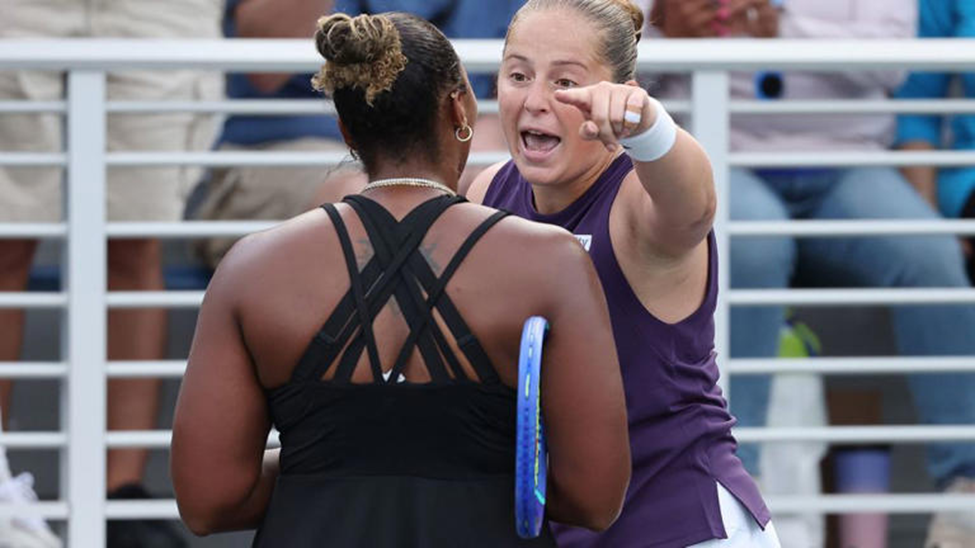
Normalcy No More … 1963 … I Have a Dream – Rev. Dr. Martin Luther King, Jr.


There seems to be a misconception about the speech that the Rev. Dr. Martin Luther King, Jr. gave 50 years ago during the ‘March on Washington’. They are still, to this day, calling his speech the ‘I Have A Dream’ speech.  That was not the name of the speech, nor was his dream portion apart of the original speech. In fact, it was requested by a woman for Dr. King to tell the world about his dream. This woman, unknown to me, but certainly have heard Dr. King mention it at a time, shouted; “Tell them about the dream Martin!”

The name of the speech, if it had a name, was ‘Normalcy, No More’. It warned white America about the racial injustices experienced by black people and asked the question of how long do you expect this to go on without retaliation? He also urged black Americans to not allow the bitter hatred of our fellow citizens to drive them to stoop to their level. That is not what anyone came there to hear; at least not from him. Dr. King was only one of many people who spoke that day for racial equality and jobs, but he was the most remembered. John Lewis also spoke, stating:

The revolution is at hand, and we must free ourselves of the chains of political and economic slavery. The nonviolent revolution is saying, “We will not wait for the courts to act, for we have been waiting hundreds of years. We will not wait for the President, nor the Justice Department, nor Congress, but we will take matters into our own hands, and create a great source of power, outside of any national structure that could and would assure us victory.” For those who have said, “Be patient and wait!” we must say, “Patience is a dirty and nasty word.” We cannot be patient, we do not want to be free gradually, we want our freedom, and we want it now. We cannot depend on any political party, for the Democrats and the Republicans have betrayed the basic principles of the Declaration of Independence.
Read more: Civil Rights March on Washington (History, Facts, Martin Luther King Jr.) | Infoplease.com http://www.infoplease.com/spot/marchonwashington.html#ixzz2dGQdmfDB


It seems that the saving grace of that day was the dream; Dr. King had lost the attention of the marchers and many felt that it was a waste of time; the fire was extinguished.  The ‘I Have A Dream’ portion of the speech given by the Rev. Dr. Martin Luther King Jr. on August 28, 1963 gave the world hope. It became the ‘Kumbaya’, so to speak, of the future and it will forever be used as a stick to calm down black people when faced with racial injustices.  The march on Washington for, ‘Freedom and Jobs’, was not an ending, but a beginning; for who I do not know?

Fifty years has passed and American’s president is a man whose father is from Kenya and mother is from America; a true African-American.

Here is the speech that was written

Five score years ago, a great American, in whose symbolic shadow we stand, signed the Emancipation Proclamation. This momentous decree came as a great beacon light of hope to millions of Negro slaves who had been seared in the flames of withering injustice. It came as a joyous daybreak to end the long night of captivity.

But one hundred years later, we must face the tragic fact that the Negro is still languishing in the corners of American society and finds himself an exile in his own land. So we have come here today to dramatize an appalling condition.

In a sense we have come to our nation’s capital to cash a check. When the architects of our republic wrote the magnificent words of the Constitution and the Declaration of Independence, they were signing a promissory note to which every American was to fall heir. This note was a promise that all men would be guaranteed the unalienable rights of life, liberty, and the pursuit of happiness.

It is obvious today that America has defaulted on this promissory note insofar as her citizens of color are concerned. Instead of honoring this sacred obligation, America has given the Negro people a bad check — a check which has come back marked “insufficient funds”. But we refuse to believe that the bank of justice is bankrupt. We refuse to believe that there are insufficient funds in the great vaults of opportunity of this nation. So we have come to cash this check — a check that will give us upon demand the riches of freedom and the security of justice. We have also come to this hallowed spot to remind America of the fierce urgency of now. This is no time to engage in the luxury of cooling off or to take the tranquilizing drug of gradualism. Now is the time to make real the promises of democracy. Now is the time to rise from the dark and desolate valley of segregation to the sunlit path of racial justice. Now is the time to open the doors of opportunity to all of God’s children. Now is the time to lift our nation from the quicksands of racial injustice to the solid rock of brotherhood.

It would be fatal for the nation to overlook the urgency of the moment and to underestimate the determination of the Negro. This sweltering summer of the Negro’s legitimate discontent will not pass until there is an invigorating autumn of freedom and equality. Nineteen sixty-three is not an end, but a beginning. Those who hope that the Negro needed to blow off steam and will now be content will have a rude awakening if the nation returns to business as usual. There will be neither rest nor tranquility in America until the Negro is granted his citizenship rights. The whirlwinds of revolt will continue to shake the foundation of our nation until the bright day of justice emerges.

But there is something that I must say to my people who stand on the warm threshold which leads into the palace of justice. In the process of gaining our rightful place we must not be guilty of wrongful deeds. Let us not seek to satisfy our thirst for freedom by drinking from the cup of bitterness and hatred.

We must forever conduct our struggle on the high plane of dignity and discipline. Again and again we must rise to the majestic heights of meeting physical force with soul force. The marvelous new militancy which has engulfed the Negro community must not lead us to a distrust of all white people, for many of our white brothers, as evidenced by their presence here today, have come to realize that their destiny is tied up with our destiny and their freedom is inextricably bound to our freedom. We can not walk alone.

And as we walk, we must make the pledge that we shall march ahead. We cannot turn back. There are those who are asking the devotees of civil rights, “when will you be satisfied?” We can never be satisfied as long as the Negro is the victim of unspeakable horrors of police brutality. We can never be satisfied as long as our bodies, heavy with the fatigue of travel, cannot gain lodging in the motels of the highways and the hotels of the cities. We cannot be satisfied as long as the Negro’s basic mobility is from a smaller ghetto to a larger one. We can never be satisfied as long as a Negro in Mississippi cannot vote and a Negro in New York believes he has nothing for which to vote. No, no, we are not satisfied, and we will not be satisfied until justice rolls down like waters and righteousness like a mighty stream.

I am not unmindful that some of you have come here out of great trials and tribulations. Some of you have come fresh from narrow cells. Some of you have come from areas where your quest for freedom left you battered by the storms of persecution and staggered by the winds of police brutality. You have been the veterans of creative suffering. Continue to work with the faith that unearned suffering is redemptive.

Go back to Mississippi, go back to Alabama, go back to South Carolina, go back to Georgia, go back to Louisiana, go back to the slums and ghettos of our northern cities, knowing that somehow this situation can and will be changed. Let us not wallow in the valley of despair.

I say to you today, my friends, that in spite of the difficulties and frustrations of the moment I still have a dream.

Thank you

Clarence

Dr Martin Luther King Jr_e-mail

I say to you today, my friends, that in spite of the difficulties and frustrations of the moment I still have a dream. It is a dream deeply rooted in the American dream. I have a dream that one day this nation will rise up and live out the true meaning of its creed — “We hold these these truths to be self evident, that all men are created equal.”

I have a dream that one day on the red hills of Georgia the sons of former slaves and the sons of former slaveowners will be able to sit down together at the table of brotherhood.

 I have a dream that one day even the state of Mississippi, a desert state sweltering with the heat of injustice and oppression, will be transformed into an oasis of freedom and justice.

I have a dream that my four little children will one day live in a nation where they will not be judged by the color of their skin but by the content of their character.

I have a dream today.

I have a dream that one day the state of Alabama, whose governor’s lips are presently dripping with the words of interposition and nullification, will be transformed into a situation where little black boys and black girls will be able to join hands with little white boys and white girls and walk together as sisters and brothers.

I have a dream today.

I have a dream that one day every valley shall be exalted, every hill and mountain shall be made low, and rough places will be made plains, and the crooked places will be made straight,and the glory of the Lord shall be revealed, and all flesh shall see it together.

This is our hope. This is the faith with which I return to the south. With this faith we will be able to hew out of the mountain of despair a stone of hope. With this faith will be able to transform the jangling discords of our nation into a beautiful symphony of brotherhood. With this faith we will be able to work together, to pray together, to struggle together, to go to jail together, to stand up for freedom together, knowing that we will be free one day.

This will be the day when all of God’s children will be able to sing with a new meaning “My country ’tis of thee, sweet land of liberty, of thee I sing. Land where my fathers died, land of the pilgrim’s pride, from every mountainside, let freedom ring.”

And if America is to be a great nation this must come true. So let freedom ring from the prodigious hilltops of New Hampshire. Let freedom ring from the mighty mountains of New York. Let freedom ring from the heightening Alleghenies of Pennsylvania.

Let freedom ring from the snowcapped Rockies of Colorado.

 Let freedom ring from the curvaceous peaks of California.

But not only that —

let freedom ring from Stone Mountain in Georgia.

Let freedom ring from Lookout Mountain of Tennessee.

Let freedom ring from every hill and molehill of Mississippi. From every mountainside, let freedom ring.

When we let freedom ring, when we let it ring from every village and every hamlet, from every state and every city, we will be able to speed up that day when all of God’s children, black men and white men, Jews and Gentiles, Protestants and Catholics, will be able to join hands and sing in the words of the old Negro spiritual,

Free at last! Free at last!

Thank God Almighty, we are free at last!

Are You Getting Tired Yet?


Are You Getting Tired Yet?

 With the recent wave of senseless deaths due to gun violence I ask the question, are you getting tired yet? I know I am. In fact, I am totally disgusted with the shooting death of Daja Robinson. I say that this was senseless, as in all Black-on-Black teen shootings, because Daja Robinson was not the attended target of the shooter; another teen on that same bus was the actual target. This gives rise to the idea that someone was going to get fatally injured regardless.

I believe we as a people have come to the point where we are now latitudinarians when it comes to the gun violence in the African-American communities. Now are the days of ‘long as it is not my child’ I’m good. But it is your child, just like it is my child, in a sense. Any one of us could have easily been riding that bus; our parents; our children. As I said, time and time again, no parent should bury their children, especially because of some senseless shooting.

I keep saying senseless because I cannot understand why someone would want to kill a teen age child. What could a child have done to anyone that would require another to take their life? I can think of a few reasons why I would take another person’s life. I would speak it here because I believe that words take on life.

So where do we go from here? If you think that ‘STOP-N-FRISK’ by the NYPD was bad and at times intimidating; condescending; disrespectful; wrong; unconstitutional; and flat out estranging the community from the people who are hired and paid with taxpayers dollars, -well you haven’t seen anything yet. I deeply oppose ‘Stop-N-Frisk’ as a deterrent for preventing potential gun related crimes, but when you make your bed hard you still have to sleep in it.

Let’s face it; our African-American children are killing our African-American children on a daily basis, and for what? If this is the results of gang activity, then we are a lost people; -a savage people. I truly dislike using that word savage in describing African-American people, because I am African-American born and raised in the Brownsville section of Brooklyn’s 73rd Precinct. Savage is the word use by white bigots and the PBA president Pat Lynch when describing and black person who does harm to a white police officer. Hey, like what I just said or not; it is what it is.

It is time to get actively involved in your communities by attending your local Community Board Meeting which are held at your local precinct. If we do not take care of our own communities, then someone else will.

Feedback and comments are welcome

Thanks

Stop-and-Frisk


STOP! FRISK!

Good God Y’all.

What is it good for?

Absolutely NOTHING!

Say it again.

            The New York Civil Liberties Union NYCLU) has revealed a shocking report that contradicts the NYPD’s claim that the aggressive street initiative notoriously known as ‘Stop-and-Frick’ has deterred and reduced violent crimes and homicides in which guns where used. These street level police interrogations conducted by New York’s Finest has not removed guns off the streets of NY, I should say in the African-American (Black) and Hispanic communities, in fact it produce nothing but resentment and hostility. Let’s take a look at the so-called initiative.

Amendment IV

The right of the people to be secure in their persons, houses, papers, and effects, against unreasonable searches and seizures, shall not be violated, and no warrants shall issue, but upon probable cause, supported by oath or affirmation, and particularly describing the place to be searched, and the persons or things to be seized.

Since 2002, in its inception, there were over 4 million of these interrogations conducted by the New York Police Department with Black and Hispanic communities being there main targets. This resulted in 90 percent of those that were stopped as being innocent of any wrong doing or potential wrong doing.

            In 2012, total New Yorkers that were stopped by police were 533,042

  • 473,300 were totally innocent equaling 89 percent.
  • 286,684 were Black equaling 55 percent
  • 166,212 were Hispanic/Latino equaling 32 percent
  • 50,615 were white equaling 10 percent

Whenever a police officer in NYC stops a person that officer is required to fill out a detailed form to record the reason for the stop. The Stop-and-Frisk data is recorded as a paper report produced quarterly and an electronic database annual report.

The Stop-and-Frisk practices of the NYPD has raise some serious questions of racial profiling and guerilla tactics that managed to estrange the citizens of these aforementioned communities from the police; who are hired to serve and protect them.

I urge you to read this full report about the Stop-and-Frisk program and get your own understanding. I also urge you all to read ‘What To Do If You’re Stopped By The Police’ that is provided by the NYCLU. Had the young boys, known as the ‘Central Park Five’, and their parents had known this they would have never been arrested.

NYCLU

www.NYCLU.org

Palm Card (What To Do)

http://www.nyclu.org/files/publications/nyclu_pub_police_card_english_0.pdf

Central Park Five – Documentary

http://www.pbs.org/kenburns/centralparkfive/