MAWA – Make/Making America White Again

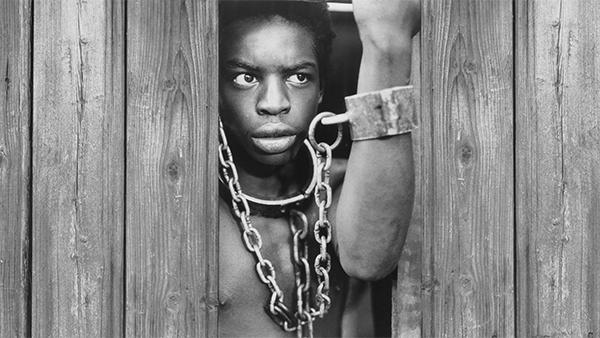
The television series Roots was very hard for me to watch, and even more difficult to understand. I was in High School and lacked the educational history and life experience in that period of time. Though my parents were from the deep south, my father from Sandersville Georgia, and my mother from Olar South Carolina. No, they were not enslaved, but they were only a generation, maybe two, from it. My parents are from the Jim Crow south.
Roots, the series covered the period of slavery in America from 1850 to 1865, so I thought. Roots actually, according to the timeline given for the series covers a period from 1750 to 1865. Now the series Roots is not historically accurate Roots (Google, n.d.) and I will not concentrate on Roots per say.
The television miniseries Roots (1977) covered slavery from the mid-18th century to the post-Civil War era. The saga chronicles multiple generations of one family, based on Alex Haley’s 1976 novel Roots: The Saga of an American Family.
The main timeline of the miniseries includes:
Part 1 (1750–1767): The story begins in Gambia, West Africa, with the birth of Kunta Kinte and follows his journey after being captured and sold into slavery.
Part 2 (1767–1768): Kunta endures the transatlantic journey and an auction in Annapolis, Maryland, and is sent to work on a Virginia plantation.
Part 3 (1776): Kunta attempts to escape but is recaptured and hobbled. He is then sold to a doctor’s family.
Part 4 (1780–1790): Kunta marries another slave, Belle, and they have a daughter, Kizzy.
Part 5 (1806): Kizzy is sold and abused by her new owner, giving birth to a son, George.
Part 6 (1824): Kizzy’s son George becomes a talented cockfighter, earning the nickname “Chicken George”.
Part 7 (1861–1865): Chicken George is sent to England and returns after the start of the Civil War, only to learn his family has been sold and that his mother has died (Google, n.d.).
Part 8 (1865–1870): With the war over, Chicken George works to unite his family, helping them escape the oppressive sharecropping system and find their own land in Tennessee.
1850 America
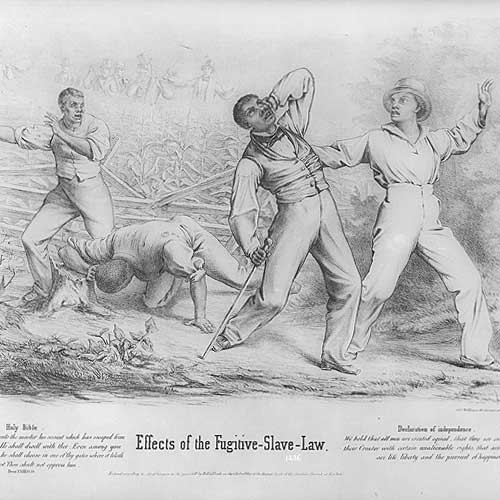
In the 1850s, the conflict over slavery brought the United States to the brink of destruction. Congress enacted new policies related to slavery. The courts ruled on cases related to slavery. Abolitionists continued their efforts to end the institution. Political parties, also affected by issues related to slavery, realigned and reformed. Newspapers, novelists, activists, and reformers joined the debate, all responding to the crisis, or even tried to inflame it in their own way, but all of these events were important in the decade preceding Abraham Lincoln’s election and the outbreak of Civil War. In an attempt to prevent a civil war, Congress enacted a series of laws that became known as the Compromise of 1850. These included an enhanced Fugitive Slave Law, which required law enforcement officials throughout the country to aid in the arrest of alleged runaway slaves, and it provoked a national controversy with many Northerners refusing to enforce the law’s provisions (Primary Source Set the Civil War: The Nation Moves Towards War, 1850-61, n.d.)
https://www.census.gov/library/visualizations/1850/dec/political-map.html

The main focus will be on the year 1850, and I will reiterate the laws, acts, treaties … etc. of that year.
Backdrop – Taking a Knee and The Star-Spangled Banner
When Colin Kaepernick, at that time, quarterback for the San Francisco 49ers, refused to stand during the playing/singing of the United States of America’s national anthem for the injustices Black Americans faced from the inception of enslavement to present time, grew attention in the NFL, and in small pockets of the United States (Wyche, 2016). It wasn’t until Mahmoud Abdul-Rauf who played for the NBA’s Denver Nuggets, formerly Chris Jackson prior to his conversion to Islam, refused to acknowledge the flag in protest, citing similar reasons as Kaepernick and saying that it conflicted with some of his Islamic beliefs (Wyche, 2016). Abdul-Rauf was briefly suspended by the NBA because of the backlash of the fans for his action, but a compromise was worked out between the league Rauf; he eventually stood with his teammates and coaches at the playing of the national anthem (Wyche, 2016).
Everything concerning the refusal of standing during the playing of the National Anthem went south when Drew Brees the quarterback of the NFL’s New Orleans Saints stated that he will not support what he deemed the disrespect of the U.S. flag, and apologizing for his comments after being educated on that subject matter; Donald Trump stating that Brees should not have apologized; Laura Ingraham of Fox News and her “shut up and dribble” comment to Lebron James’ comments about Drew Brees’ initial comment, and the murder of George Floyd (Pickman, 2020), which in turn sparked the ‘Black Lives Matter’ movement; funny thing about movements, they just move from one place to another, we need a revolution.
When all the smoke cleared, Black Americans began singing the National Anthem at all the major sporting events, MLB, NFL, and NBA. They sang their hearts out; they sang it loud and proud. The overall majority of Black Americans have no idea what The Star-Spangled Banner is about.
Oh say can you see?
Francis Scott Key penned the Star-Spangled Banner during the war of 1812 during the bombing of Fort McHenry in the slave-state of Maryland. Now, if you are a White American, it can be viewed as a bad thing, but I am not, so do not expect me to feel bad about what was happening to Maryland at that time. In June of 1812 the U.S. declared war with the United Kingdom [Great Britain] (The War of 1812, 2011), most times when a person hear the war of 1812 they tend to think of Napolean, and/or The Year 1812, Solemn Overture, Op. 49, popularly known as the 1812 Overture, is a concert overture written in E-flat major, E-flat minor1880 by Russian composer Pyotr Ilyich Tchaikovsky, to commemorate Russia’s victory over France, which is now used in the United States during the 4th of July fireworks display (Overture). Oh, say what!
Fugitive Slave Law
References
References
(n.d.). Retrieved from Google: https://www.google.com/search?q=The+television+series+Roots+covered+slavery+from+what+time+period.&sca_esv=7482b234d8f1e9f4&source=hp&ei=5AjKaMXNBsm9ptQP69KfyAg&iflsig=AOw8s4IAAAAAaMoW9KXczBEkN5ALn6AEy2134lZ9l9os&ved=0ahUKEwjFz6rxzN6PAxXJnokEHWvpB4kQ4dUDC
Primary Source Set The Civil War: The Nation Moves Towards War, 1850-61. (n.d.). Retrieved from Library of Congress: https://www.loc.gov/classroom-materials/civil-war-the-nation-moves-towards-war-1850-to-1861/
Slavery and the Judiciary, 1740 to 1860. (n.d.). Retrieved from Libraryo of Congress: https://www.loc.gov/collections/slavery-and-the-judiciary-from-1740-to-1860/about-this-collection/
Timeline – The 1850s. (n.d.). Retrieved from America’s Best History.com: https://americasbesthistory.com/abhtimeline1850.html
 Sons & Daughters of Trans-Atlantic Afrika